

12 energy tech startups that just emerged from stealth
Energy tech has proven surprisingly resilient to the broader backlash against climate investing, as geopolitical shocks and the falling costs of clean energy offer significant headwinds.<br><br>From teams beaming solar power down from orbit to engineers resurrecting airship technology to fix wind turbines, here are 12 energy tech startups that recently emerged from stealth – and you should have you on your radar.<br>
.png)

Energy tech is booming.
Global investment into the energy transition hit a record $2.3 trillion in 2025, up 8% from the prior year, according to BloombergNEF.
Of those massive sum, data shows that energy tech companies attracted $77bn in private and public equity last year – a 53% jump on 2024 and the sector's first annual funding increase in four years.
At the early stage, much of the activity in energy tech is centred around software optimisation, energy storage, and solution to make AI-powered data centres more efficient. Many are also working on entirely new ways to produce clean power.
While climate tech startups more broadly have faced signficant headwinds in recent years, energy is another matter entirely.
Supply chain vulnerabilities exposed by years of import over-reliance are accelerating the push for European energy sovereignty, while geopolitical shocks have turned energy security from a policy aspiration into a boardroom priority.
Bottlenecks in power conversion, procurement, transmission, and access to baseload generation are creating the conditions for a boom in energy tech startups.
Here are 12 new companies that recently stepped out of stealth to capitalise on the transition.
1. Telura Energy

German deep-tech startup Telura, based in Karlsruhe, emerged from stealth in March 2026 with €4.4m in pre-seed funding from Nucleus Capital, Possible Ventures, and First Momentum.
What is it? Telura is a geothermal energy startup developing electric impulse drilling technology that uses high-voltage pulses to break rock from within rather than grinding through it.
The thesis: Conventional drill bits wear out fast in hard granite at depth, making deep geothermal uneconomical at most sites. Telura's approach is designed to change that equation without fracking or ultra-deep drilling.
The team: CEO Philipp Engelkamp, serial entrepenur and co-founder of climate tech unicorn INERATEC, and CTO Andrew Welling, former VP of engineering at Rolls Royce.
The company has signed a validation agreement with Germany's innovation agency SPRIND and is targeting market entry in 2026.
2. Hyperscale Power
Swiss deep-tech startup Hyperscale Power, based in Zurich, emerged from stealth in March 2026 with $5.5m in seed funding co-led by World Fund and Vsquared Ventures, with Ignite Next also participating.
What is it? Hyperscale Power is developing solid-state transformers the company says are roughly 10 times smaller than conventional units.
The thesis: Transformer supply chains are already under strain and the problem is expected to worsen as hyperscalers accelerate data centre build-outs. The startup is better solid-state technology could address both the space and lead-time constraints simultaneously.
The team: Co-founders Dr Daniel Rothmund, out of ETH Zurich, and Dr Sami Pettersson, from Tampere University of Technology, each bring over a decade of solid-state transformer experience.
3. Enlightra
Swiss-American deeptech company Enlightra, based in Renens near Lausanne, Switzerland, emerged from stealth in December 2025 with $17.9m raised from Y Combinator, Runa Capital, Pegasus Tech Ventures, Protocol Labs, Halo Labs, Asymmetry Ventures, TRAC VC, and others including the European Innovation Council.
What is it? Enlightra builds chip-scale multi-wavelength lasers designed to replace copper wiring inside GPU clusters with optical interconnects the company says move data faster while consuming substantially less power.
The thesis: As AI clusters expand, copper wiring is increasingly seen as a bottleneck for both performance and energy efficiency.
The team. Founded by two physicsts Maxim Karpov and John Jost, whose research contributed to two Nobel Prize-winning advances in quantum computing and optical frequency combs.
Pilot production is targeted for 2027.
4. Willo
Finnish deep-tech company Willo, based in Espoo, emerged from stealth in January 2026 at CES, raising $3.19m in pre-seed funding led by byFounders, with Interface Capital, Unruly Capital, and Wave Ventures participating. Angels include Andreas Klinger, co-initiator of the EU Inc initiative and GP of PROTOTYPE.
What is it? Willo is developing a wireless power system the company says can charge devices in motion without pads, cables, or alignment. It targets industrial robotics and autonomous systems where charging downtime is an operational constraint.
The thesis. Most wireless charging systems require precise positioning, limiting them to stationary devices. Willo's magneto-inductive field technology is designed to remove that constraint entirely.
The team. Serial entrepreneur CEO Harri Santamala, who previously co-founded and scaled Sensible4 to over 100 employees, and CTO Dr Nam Ha-Van, who spent over a decade on wireless power research at Aalto, where co-founder Marko Voutilainen also studied.
5. Factor2 Energy
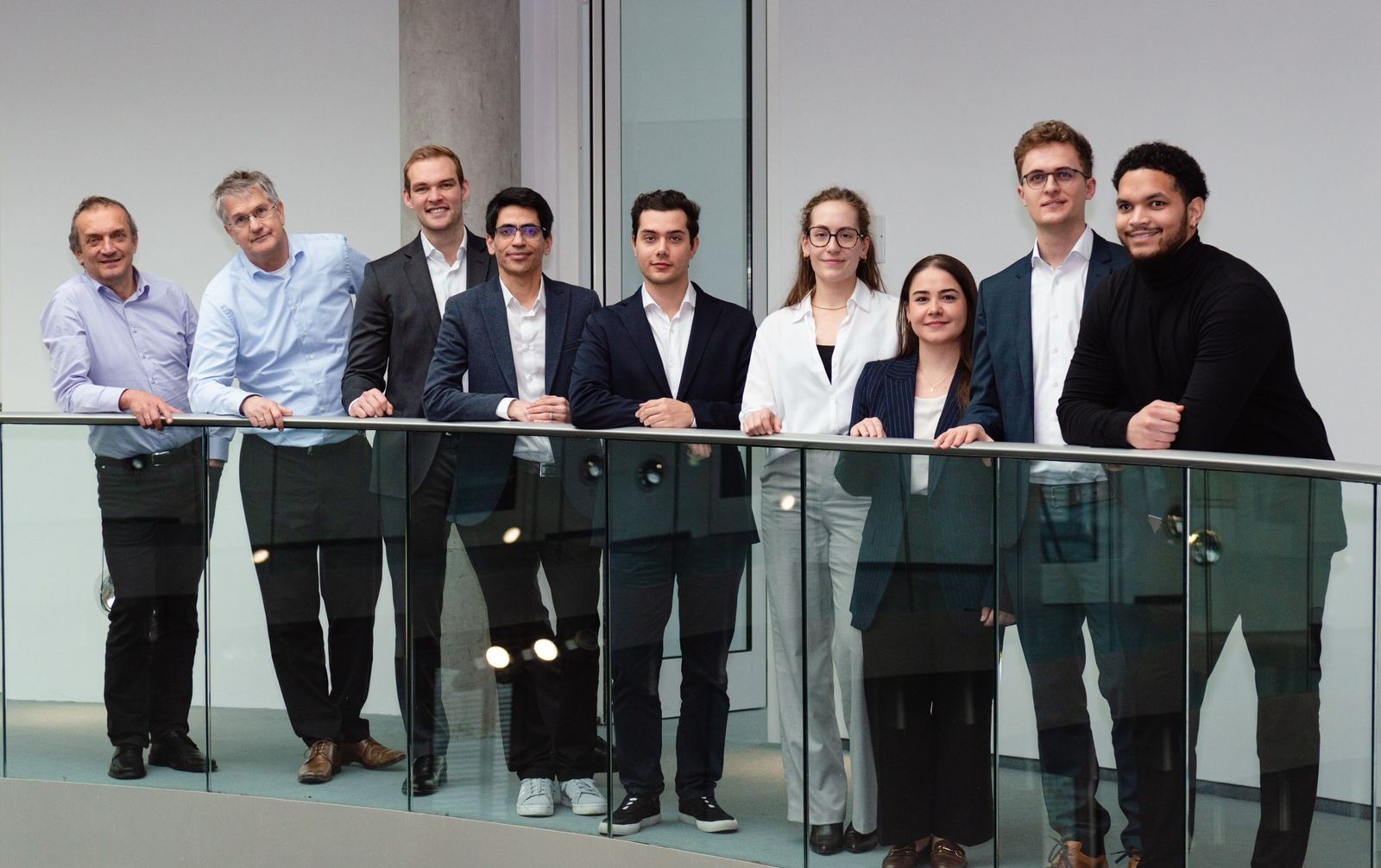
German climate-tech company Factor2 Energy, based in Duisburg, emerged from stealth in September 2025 with $9.1m in seed funding led by At One Ventures, with HTGF, Siemens Energy Ventures, Verve Ventures, and Gründerfonds Ruhr participating.
What is it? Factor2 is developing a geothermal power system that circulates CO2 instead of water or brine, which the company says can deliver up to twice the output of conventional systems at equivalent depths without fracking or water-intensive processes.
The thesis: Using CO2 as a working fluid potentially opens up geological sites unsuitable for water-based geothermal, including reservoirs originally designated for carbon capture and storage.
The founders: Felix Böhmer (CEO), Michael Wechsung, and Jörg Strohschein all worked together at Siemens Energy, where the proof of concept was first developed.
6. TerraSpark
Luxembourg-based TerraSpark emerged from stealth in March 2026 with $5.5m in pre-seed funding from Daphni, Sake Bosch, better ventures, Hans(wo)men Group, and the Luxembourg Business Angel Network.
What is it? TerraSpark is developing space-based solar power – capturing energy in orbit and transmitting it to Earth via radio frequency beams received by ground-based rectennas.
The thesis. Space-based solar farms can theoretically produce 24/hr energy, without taking up land on Earth.
The founders: Dr Sanjay Vijendran, who previously led ESA's Solaris programme and has hardware on Mars, COO Matthias Laug was founding CTO of Lieferando and later Tier Mobility and CEO Jasper Deprez, who founded Tradler.
An orbital demonstrator is planned for 2027, with full commercial deployment targeted for 2030
7. Porpoise Power
UK tidal energy startup Porpoise Power, based in Oxford, emerged from stealth in last year with $1.3m in funding led by Zero Carbon Capital, with Creator Fund, Oxford Science Enterprises, and Oxford University Innovation participating.
What is it? A University of Oxford spinout developing a tidal energy system built around an oscillating hydrofoil modelled on dolphin locomotion.
The thesis: Porpoise says its design could materially expand the number of deployable locations for tidal energy, lower costs, and displace fossil fuel peaking plants as a source of baseload power.
The founders: CEO John Kennedy, an engineer who studied at Cambridge and INSEAD, and co-founder Adrian Thomas, a professor of Biomechanics at Oxford.
8. Einklang
German energy startup Einklang, based in Cologne, emerged from stealth in February 2026 with $2.4m in pre-seed funding led by Vireo Ventures, with SI Ventures, Saxovent, Angel Invest, DnA Ventures, and Heimatboost participating.
What is it? An Energy-as-a-Service platform bundling electricity procurement, battery storage, and consumption optimisation for Germany's mid-sized industrial businesses.
The thesis: Einklang is targeting that underserved SMEs in Germany, claiming potential cost reductions of 30–50%.
The team: All four co-founders – Lucas Jonas, Jonathan Schulte, Paul Ziche, and José Neri – studied at RWTH Aachen University and previously built ventures including Voltfang and Impuls Energy.
9. Avoltra

German energy intelligence startup Avoltra, based in Nuremberg, emerged from stealth last year with $2.5m in pre-seed funding led by Project A, with the CDTM Venture Fund also participating.
What is it? An AI-powered energy procurement platform for industrial manufacturers providing real-time market analysis and automated purchasing recommendations.
The thesis: Rising and unpredictable energy prices have turned procurement into a boardroom priority for European manufacturers, but most still rely on tools built for stable markets. Avoltra's bet is that AI-driven optimisation becomes a standard capability layer for industrial energy management.
The founders: Dr Angelo Canzaniello Sáenz, Franz Zünkler, and Jaakko Nurkka built the company through Project A's Studio programme, backed by a notably senior angel roster including Forto co-founder Michael Wax, former thyssenkrupp CEO Martina Merz, and former Klöckner & Co CEO Gisbert Rühl.
10. Voltico
Dutch startup Voltico, based in Amsterdam, the Netherlands, emerged from stealth in January 2026 with $1.1m in pre-seed funding from Graduate Ventures, Dutch Operator Fund, Innovatiefonds Noord-Holland, and angels Vincent Ruijter and Huib Wurfbain.
What is it? A platform automating the management of EV emission credits – handling data collection from charging sessions, regulatory validation, and credit monetisation for operators and consumers – targeting the compliance burden created by RED3 implementation across Europe.
The thesis: As of January 2026, RED3 allows home EV charging station owners to sell emission rights through accredited providers for the first time, materially expanding the addressable market beyond commercial operators; Voltico is positioning as the compliance infrastructure layer for that shift.
The founders: Brothers Maarten Poot who previously co-founded shared mobility company Felyx, and Edward Poot, who co-founded fintech Cino.
11. Horizon Airships
German startup Horizon Airships, based in Hamburg, has not yet disclosed external funding or a formal public launch date, but has begun sharing details of its technology publicly.
What is it? An early-stage company developing a lighter-than-air logistics system aimed at replacing road-bound transport of oversized wind turbine components.
The thesis: Road transport of large wind components requires specialised vehicles, extensive permitting, and often significant infrastructure modification. Horizon says its airship approach could cut logistics costs by up to 90%.
The team: All four co-founders – CEO Moritz Hoffmann, CTO Rupert Michiels, Mario Hanser, and Luis Restat – studied at the University of Freiburg, covering systems engineering, materials science, and computational modelling between them.
12. Terranum
Swiss startup Terranum, based in Zurich, has not yet disclosed external funding, but the co-founders have begun sharing details of the company's plans publicly.
What is it? A data centre power infrastructure developer combining renewable energy development, project financing, and grid access expertise with local teams handling permitting and stakeholder management – using a modular build methodology designed to bring initial capacity online while construction continues.
The thesis: Grid connection delays and long infrastructure lead times are among the most significant bottlenecks slowing data centre deployment across Europe and beyond. Terranum's most significant disclosed project is a planned 100 MW renewable-powered campus in Prieska, South Africa, targeting hyperscale demand by 2029 in partnership with Prieska Power Reserve.
The team: CEO and MIT alum Felix Huettenbach, best known for scaling Sameday Health into one of the fastest-growing digital health platforms during the COVID-19 pandemic. He's joined by co-founder and energy tech operator Victor Decalf.
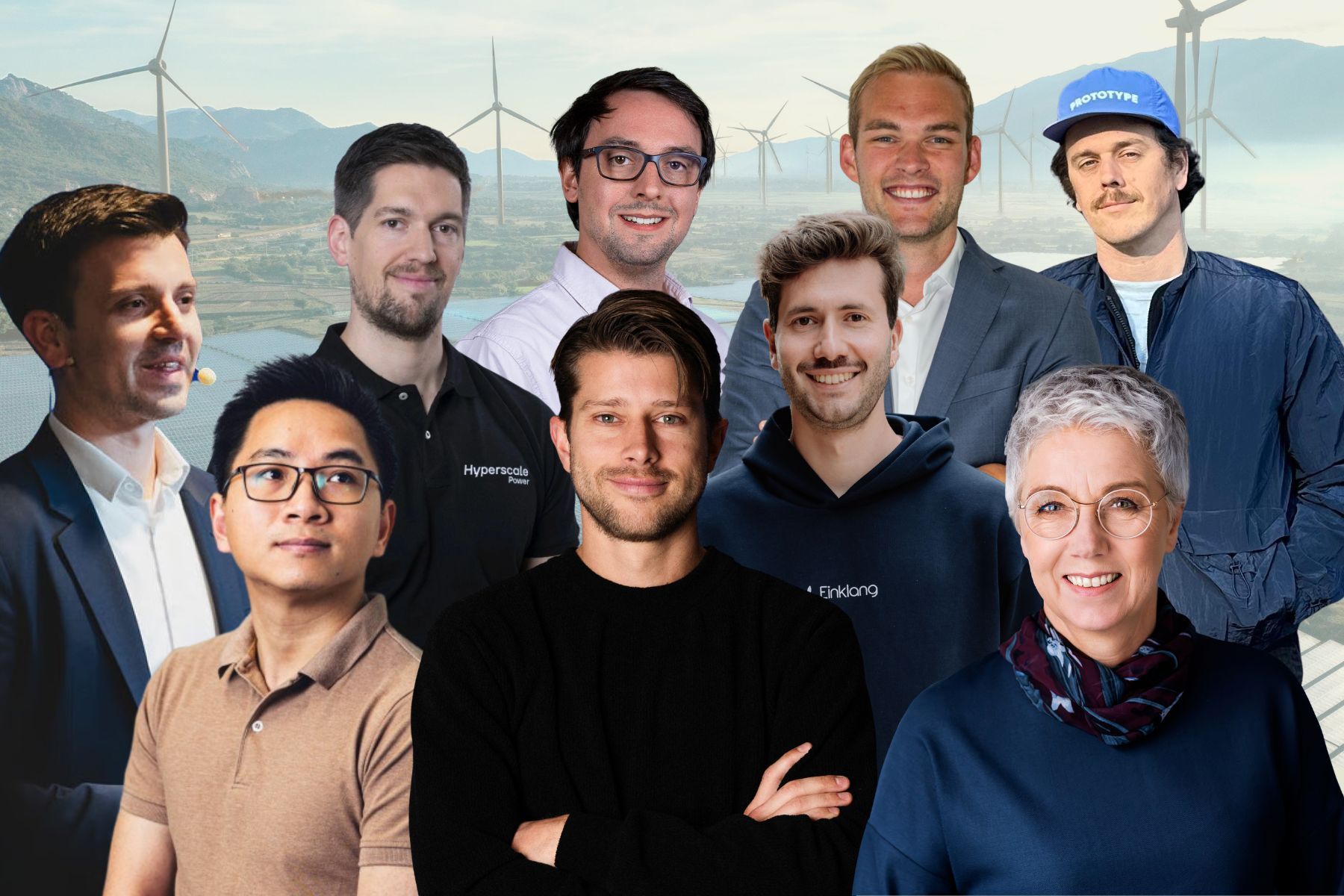
Pictured: Nam Ha-Van (Willo); Martina Merz (Investor and former CEO of ThyssenKrupp); Andreas Klinger (founder Prototype Capital); Philipp Engelkamp (Telura); Daniel Rothmund (Hyperscale); Matthias Laug (Terraspark); Lucas Jonas (Einklang); Maarten Poot (Voltico); Felix Huettenbach (Terranum); Felix Böhmer (Factor 2 Energy)
Get full access to Europe's new platform for impact news
- Quality journalism, interviews, investor profiles and deep-dives
- Daily newsletter with top stories, latest funding rounds and roundup to keep you in the loop
Keep reading – get in the loop!
- Håll dig i loopen med vårt dagliga nyhetsbrev (gratis!)
- Full tillgång till daglig kvalitetsjournalistik med allt du behöver veta inom impact
- Affärsnätverk för entreprenörer och investerare med månatliga meetups
Fortsätt läsa – kom in i loopen!
- Håll dig i loopen med vårt dagliga nyhetsbrev (gratis)!
- Full tillgång till daglig kvalitetsjournalistik med allt du behöver veta inom impact
- Affärsnätverk för entreprenörer och investerare med månatliga meetups