

Candela flies into ‘non-democracies’ as Europe rollout stalls: ‘Market is more or less dead’
Candela’s electric ferries are designed and built in Sweden, backed by European capital, and pitched as a cleaner alternative to the continent's diesel fleets. <br><br>So why are most of them ending up outside Europe?<br><br>To find out, we visited Candela’s Stockholm factory and sat down with founder Gustav Hasselskog to talk about Europe’s regulatory roadblocks, the company’s high-stakes scale-up challenge, and why he believes climate tech startups shouldn’t get more government money.<br><br>
.png)

The factory floor hums with quiet intensity. Eleven sleek hulls sit in various stages of completion, each one with a glossy black carbon fibre shell that catches the industrial lighting like wet ink. Teams of engineers move between them with the focused energy of worker ants building something improbable – electric hydrofoil ferries that practically fly above the water.
This is Candela's production facility, north of Stockholm, and it's scaling fast. Two hundred employees now, hiring 10 per month, cranking out one new 30-passenger ferry per month. At full capacity, the plant is expected to produce 40 boats every year.
But scan the order book and you'll barely see Sweden, or even wider Europe in sight. Saudi Arabia, the US, Thailand, India, the Maldives – that's where these Swedish-designed, Swedish-built ferries are mostly headed.
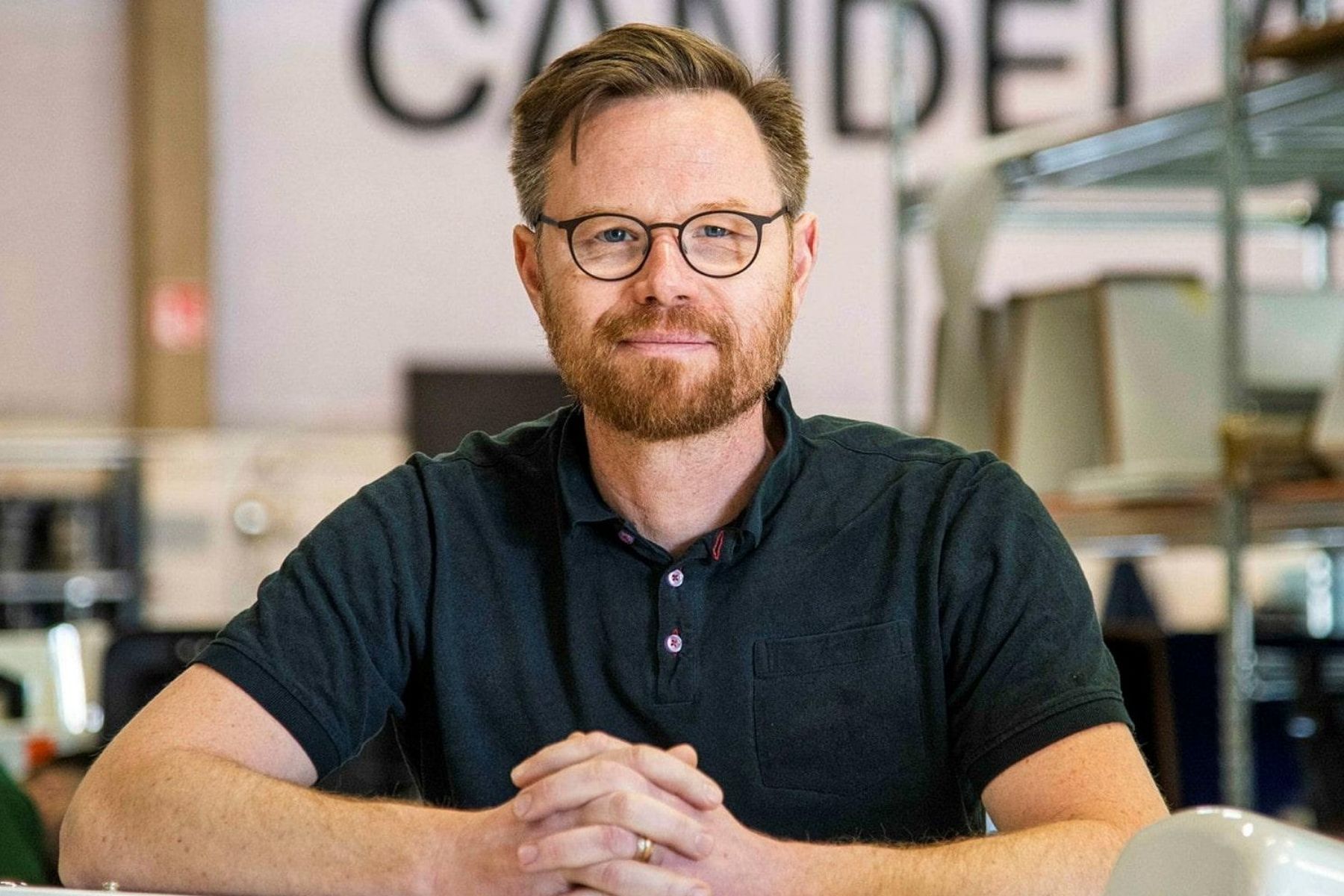
"We have had lots of success in developing countries and also in non-democracies," CEO and founder Gustav Hasselskog tells me matter-of-factly over a coffee at his office, which overlooks the docks in Stockholm's Frihamnen district.
It's an uncomfortable truth for a company that looked like it could be one answer to Europe's existing fleet of dirty, lumbering diesel ferries.
Candela's P-12 vessel – powered by massive battery packs driving a lightweight, carbon fibre frame – promises to cut energy use by 80%, slash commute times in half, and produce virtually no wake as it glides above the water on hydrofoils.
Yet across Europe, Candela hits wall after wall. Regulatory approval can take years more than in other parts of the world, Hasselskog says. But the real killer is economics.
European ferries, most of which run on diesel, are typically heavily subsidised. In Stockholm, taxpayer money covers around 75% of the cost, with ticket sales making up the deficit.
"There are very limited opportunities for private operators to run ferry business in Europe," Hasselskog says. "That market is more or less dead because you can't compete with the government."
Candela launched its first pilot route in Stockholm in 2024 which whisks passengers between the island of Ekerö and the city centre in 25 minutes – half the time it took previously. However, Hasselskog isn't optimistic they'll reach significant scale in their home base anytime soon.
"The city bodies are very slow to try new stuff and very risk-averse in general," he says. "It's sad really."
While Candela still lobbies the local government somewhat, says Hasselskog, the company is putting its full focus on more receptive markets.
Scaling despite scarcity
Back at the factory, Candela is racing to fill its order book, which stands at around 50 P-12 vessels. The largest is a single order for 11 ferries to Mumbai, India, which seeks to cut traffic congestion and emissions in the city of 23 million people.
While upfront capital from these orders is partly fuelling the boats' manufacture, Candela still relies on private capital. The company has raised around €110m to date from investors including SEB Equity, EQT, and French boatmaker Groupe Beneteau, and plans to close another funding round in the near future, according to Hasselskog.
According to company filings seen by Impact Loop, Candela posted an EBITDA loss of €19.1m in 2024, only a marginal improvement from the previous year.
Candela's ramp-up comes at a difficult time for climate tech companies, especially those building hardware.
Sweden alone witnessed numerous bankruptcies in 2025 including electric truck maker Volta Trucks and Europe’s battery champion Northvolt. Candela’s competitor X Shore, which raised $100m for its own version of an electric boat, shut down its production arm in October after failing to raise new capital.
Venture capital funding for European climate tech dropped sharply again last year, down to $9.6bn from $13.6bn in 2024 – far below the $23.9 billion peak in 2021.
Hasselskog admits the challenges in the funding environment, especially at the Series B and C stage – the point where many startups run out of cash.
"For us, we're looking to crawl through the valley of death," he says. "And once we get to the other side we'll consider whether we want to raise growth capital to fuel a faster expansion."
The founder gets up from his seat and extracts a tin of snus from the draw of his desk. He puts one between his gums and sits back down. Our conversation, perhaps predictably, turns to ways to unlock more money for European climate tech.
'We need people to get filthy rich'
The question of how far the Swedish state should go in backing startups has become increasingly contentious. After Northvolt, attention has now turned to Stegra, which is seeking further public support for its green steel plant in northern Sweden.
Despite his quarrels with government policy, Hasselskog doesn't believe boosting public spending is the right thing for climate tech. In fact, he thinks it's wrong.
"I don't think taxpayers' money should be used for backing novel tech and risky projects," he says. "People with spare capital can take those risks, but governments shouldn't."
For Hasselskog, the real problem is capital formation – or the lack of it.
"We need more people to get very rich in Europe – because they are the ones that end up funding the next generation of companies," he says, pointing to EQT, Candela's lead investor, as an example of how accumulated wealth can be recycled into new industries.
It's the kind of argument that might make social democrats cringe, but Hasselskog doubles down.
"There is so much money just sitting on interest-bearing bank accounts, especially in Germany. I mean, it's a catastrophe," he says. "And if we can unlock some of that, then we're going to have some pretty cool stuff happening in Europe."
For now, Candela will have to ride the current clean tech funding downturn and hope that demand from outside Europe will keep its batteries powered up.
Get full access to Europe's new platform for impact news
- Quality journalism, interviews, investor profiles and deep-dives
- Daily newsletter with top stories, latest funding rounds and roundup to keep you in the loop
Keep reading – get in the loop!
- Håll dig i loopen med vårt dagliga nyhetsbrev (gratis!)
- Full tillgång till daglig kvalitetsjournalistik med allt du behöver veta inom impact
- Affärsnätverk för entreprenörer och investerare med månatliga meetups
Fortsätt läsa – kom in i loopen!
- Håll dig i loopen med vårt dagliga nyhetsbrev (gratis)!
- Full tillgång till daglig kvalitetsjournalistik med allt du behöver veta inom impact
- Affärsnätverk för entreprenörer och investerare med månatliga meetups