

From podcasts to influencers: How this Paris VC turned media into a dealflow engine
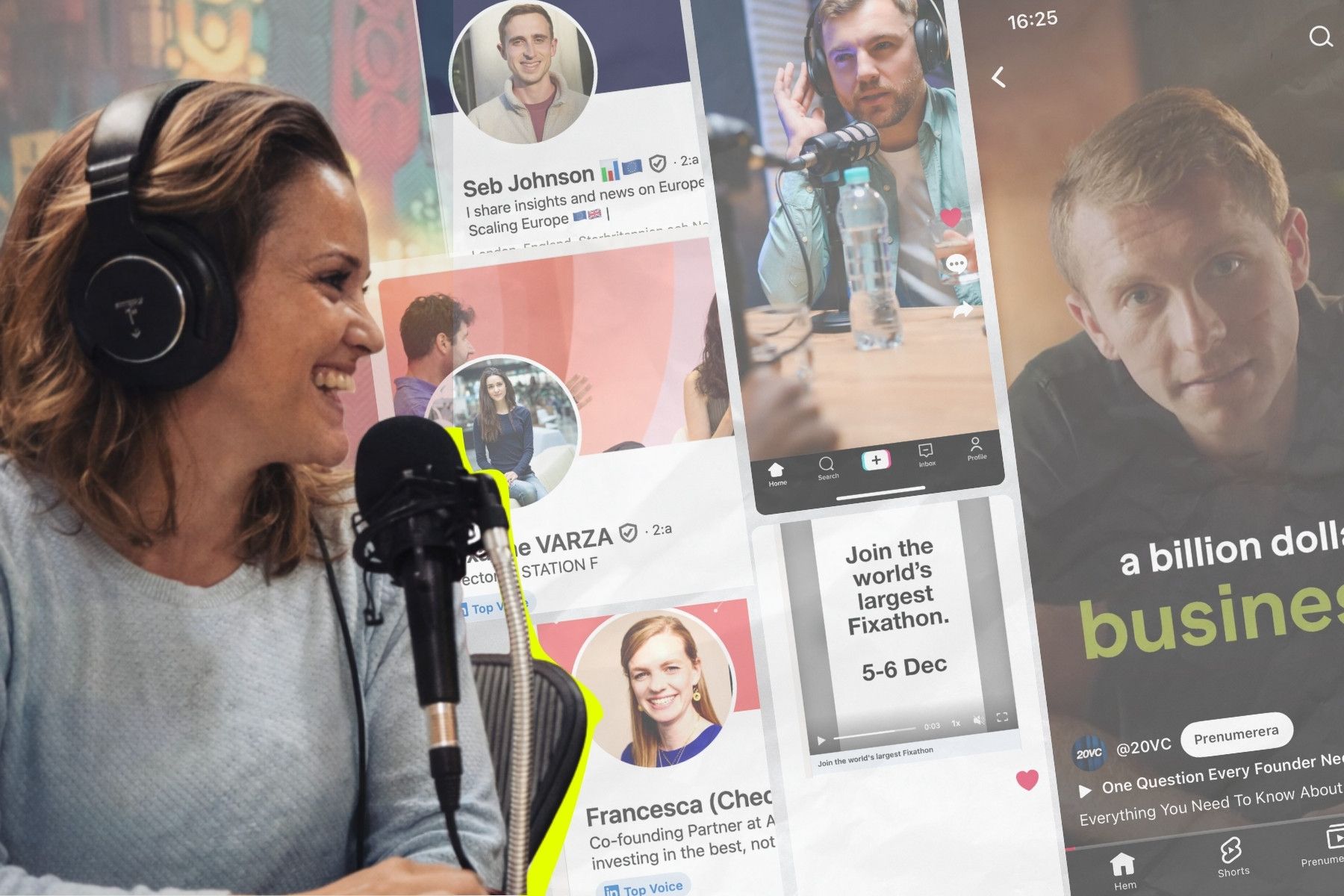
French venture capital firm Daphni has built a full-scale media operation spanning podcasts, newsletters, research reports, and influencer partnerships. <br><br>The Paris-based VC, which recently raised a new €260m fund, says the strategy has generated deal flow and built a strong founder community that compounds over time.<br><br>In an interview with Impact Loop, Daphni partner and chief marketing officer Aurelie Van Peteghem, outlines:<br><br>→ Five media hacks for every investor <br>→ The best media channels for VCs right now<br>→ How they doubled their podcast audience in 12 months<br>
.png)

For most of its history, the venture capital industry operated on discretion. Deals were done quietly, theses went unpublished, and the best funds let their returns do the talking.
Now, that view is shifting.
Inspired in part by Andreessen Horowitz, the US firm widely credited as the first VC to build a genuine media operation, and others such as British podcaster Harry Stebbings' 20VC, many impact investors have gone all-in on media as attention becomes the new currency. Daphni, a Paris-based early-stage VC firm, is one of them.
Since its founding in 2016, Daphni set out to function as both an investor and a content company. The ambition was to make media a pillar of the business, not an add-on.
Today, the firm – which recently raised a €260m new fund – runs a media strategy spanning newsletters, research reports, podcasts, video content, founder stories, events, and influencer partnerships. The team credits this infrastructure not just with building reputation, but with generating deal flow, securing board seats and cultivating the kind of founder community that compounds over time.
“After many years, you can really see the benefits,” Daphni partner and chief marketing officer Aurelie Van Peteghem tells Impact Loop.
The channel mix
Daphni’s media output is broader than most funds would attempt. It spans several distinct formats, each with a specific purpose:
1. Newsletters, research reports, and sector mapping exercises form the written backbone of the strategy. These are consistent and searchable: useful for establishing genuine expertise within the firm’s investment themes. The goal, as the team describes it, is to be "identified on certain sectors" – so the fund is known to understand a space, not just to have invested in it.
2. The podcast has become the most strategically valuable single asset. Daphni was among the first venture capital firms in France to launch one back in 2020.
"The podcast is good for reputation, to show that we know a lot of people, that we have an ecosystem. But it’s also for us to build ambassadors – people who will help us get deal flow, board seats. It’s really strategic, but it’s a long-term strategy," says Van Peteghem.
Last year, the firm launched two new podcasts: Epitaphe, a French language edition which dives deep into the hardships of entrepreneurship, and Venturing Abroad, which features interview with founders from across the world.
Over the past year, Daphni's overall podcast audience across three titles has more than doubled. It has also managed to expand it's audience outside France – with 60% of listeners now from outside the country, compared with 30% before. The proportion of young listeners (between 15-35 years old) is also up, from 30% 12 months ago to 43% currently.
3. Events serve a complementary function. By gathering founders, LPs and ecosystem figures in person, Daphni reinforces those relationships at a human level.
4. Influencers. More recently, Daphni has begun working with technology influencers, primarily on LinkedIn and YouTube, as a way of reaching the next generation of entrepreneurs. The firm is also beginning to explore paid influencer partnerships if the audience and objective justify the investment.
5. YouTube is the next frontier. The platform is – as Erica Delamare, Daphni's podcast host for the Venturing Aborad series – notes, "exploding right now."
Daphni is actively exploring how to translate its podcast content into video and vertical formats – a move it sees as essential for reaching younger founders who increasingly expect to consume content this way.
One thing that doesn’t work as well
One of Daphni’s more unusual choices is its approach to the podcast itself – the firm rotates different team members through the co-hosting role. The stated reason is that the podcast is also a tool to promote internal cohesion within the team, not just external visibility.
But a rotating lineup makes it harder to build a personal following, Van Peteghem admits. For pure audience metrics, a single recognisable voice would almost certainly outperform.
The ideal target, says Van Peteghem, would be for a founding partner to serve as the primary face and host of the show. An example of that is Giant Ventures, whose Giant Ideas podcast is co-hosted by the London-based firm’s partners Cameron McLain and Tommy Stadlen.
Top tips
1. Test and learn like a startup
The first episodes of the podcast were not perfect. The early reports did not always land. That is fine. The goal is to launch, measure and adjust. Waiting for a polished product means never publishing anything.
"You have to test and learn, and you will see later if it works," says Van Peteghem. "Same for the report – you test, you try, does it work on LinkedIn? And then you adjust."
2. Know why you are doing it before you start
The most useful discipline before any content project is a clear answer to the question: what is this for? Not in terms of vanity metrics, but in terms of the specific relationship, reputation or reach outcome the piece of content is meant to create.
3. Don’t be a copycat
Every fund has a different thesis, culture, and voice.
"Just don’t copy," says Van Peteghem. "Be yourself. It’s really aligned with what we are at Daphni – all our actions." Replicating another fund’s format without that underlying authenticity rarely produces the same result.
4. Start with a founding partner who believes in it
This one perhaps more luck than anything. Without buy-in at the top, a communications team will spend most of its energy seeking permission rather than making things.
"You need to have one funding partner that says okay, that believes in you, and then leave the comms team to lead it," says Van Peteghem.
5. Accept that this is a long game
The benefits of a sustained media strategy in venture capital compound over years, in the form of deals that come inbound, founders who already trust you before a first meeting, and LPs who feel they know the firm before they have ever spoken to the team.
Why bother?
Media is a mechanism through which the firm makes its values, thesis, and culture legible to the outside world – particularly to young founders who are seeking funding in an increasingly crowded VC market.
"The founders…they are benchmarking us," says Van Peteghem, adding that consistency in brand and messaging is important. "We really need to say what we do and do what we say."
That accountability cuts both ways. Publishing a thesis, hosting a podcast, sharing insights about the companies you back – all of it creates a record. It forces consistency between what a fund says it believes and how it actually behaves.
And perhaps most crucially, media can boost returns. Venture capital deal flow is partly a function of reputation and reach. The more founders, operators and co-investors encounter a fund’s content – whether through a podcast, a newsletter or a video – the more likely that fund is to be in the room when it matters.
"It does help with our deal flow,” says Van Peteghem. "I think it also helps with our visibility, not only here in Paris, not only in France, but also in Europe."
Then there are the harder-to-quantify returns: the podcast guest who becomes a board candidate, the founder who remembers a long conversation three years later, or the LP who encountered a firm’s name in a newsletter and decided to dig deeper.
Get full access to Europe's new platform for impact news
- Quality journalism, interviews, investor profiles and deep-dives
- Daily newsletter with top stories, latest funding rounds and roundup to keep you in the loop
Keep reading – get in the loop!
- Håll dig i loopen med vårt dagliga nyhetsbrev (gratis!)
- Full tillgång till daglig kvalitetsjournalistik med allt du behöver veta inom impact
- Affärsnätverk för entreprenörer och investerare med månatliga meetups
Fortsätt läsa – kom in i loopen!
- Håll dig i loopen med vårt dagliga nyhetsbrev (gratis)!
- Full tillgång till daglig kvalitetsjournalistik med allt du behöver veta inom impact
- Affärsnätverk för entreprenörer och investerare med månatliga meetups