

Greenland’s resources draw startups and investors: 'Huge opportunities, huge risks'
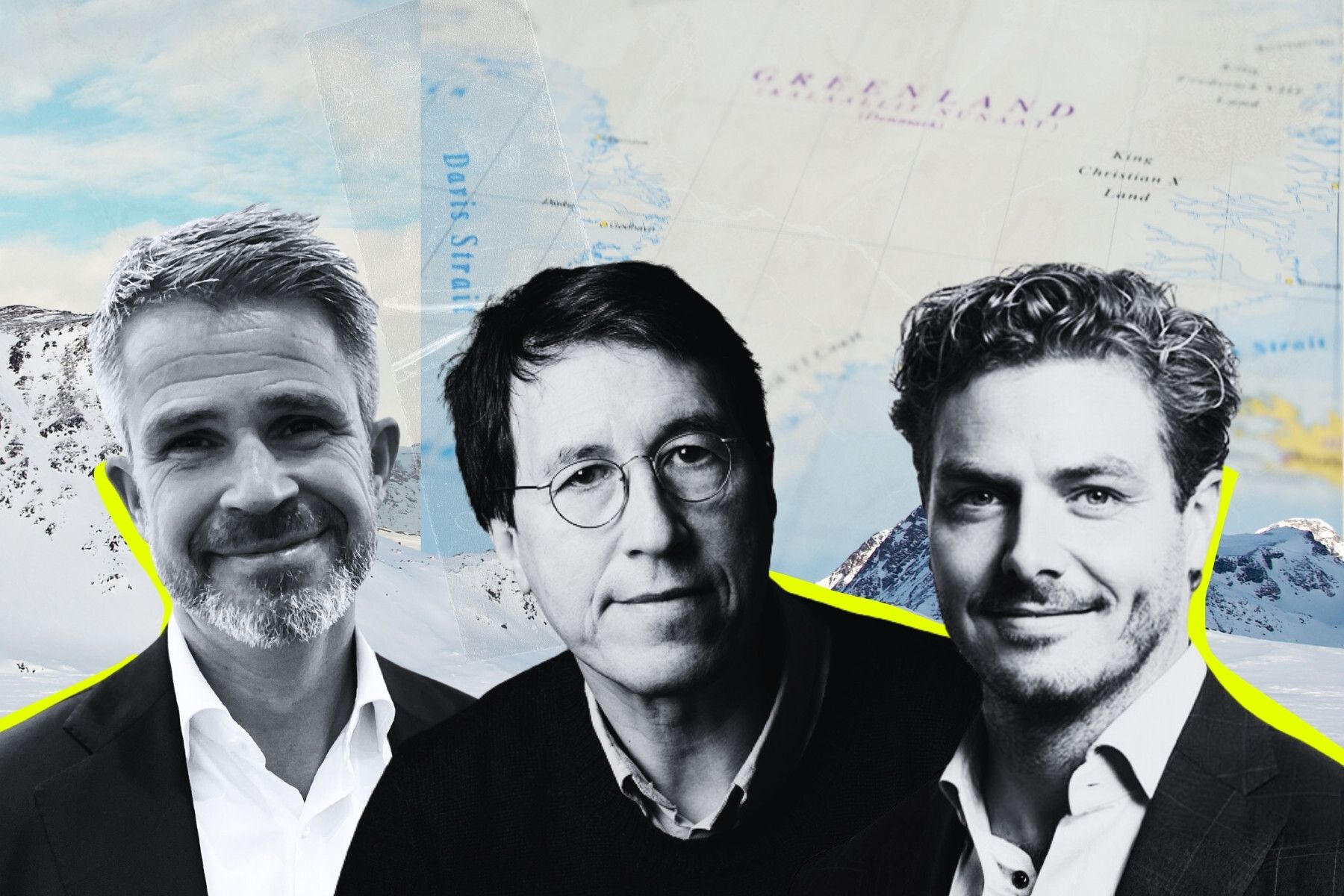
Greenland is back in the global spotlight after US President Donald Trump renewed threats to seize the autonomous territory of Denmark last week.<br><br>For billionaires, investors, and a handful of startups, though, Greenland has long been on the radar. Its glaciers, minerals, and meltwater are of particular interest, although environmental concerns loom large.<br><br>“There are huge opportunities but also huge risks," Jonas Ahm-Lundgren, partner at Copenhagen-based The Footprint Firm, tells Impact Loop.
.png)

The world’s attention has once again returned to Greenland, after US President Donald Trump last week escalated his longstanding threats to seize the autonomous territory.
However, for some startup founders, investors, and billionaires, Greenland has long been on the radar. Its wealth of natural resources – from rare earth minerals to meltwater so pure some call it ‘white gold’ – are particularly appealing.
“I think it needs to be handled carefully from a sustainability perspective, but [Greenland] is also a really interesting place because there’s no doubt they have phenomenal natural resources,” Jonas Ahm-Lundgren, partner at Copenhagen-based The Footprint Firm, tells Impact Loop. "There are huge opportunities but also huge risks."
The Footprint Firm is an early investor in Rock Flour Company (RFC), possibly the only climate tech startup operating in Greenland. RFC plans to collect the fine, mineral-rich dust created as glaciers grind rock into powder and ship it to farms worldwide.
Glacial rock dust
The concept is simple. Spread on soil, the crushed rock reacts with rainwater and carbon dioxide, locking CO2 in the ground while improving soil health and crop yields. Farmers gain a soil fertiliser, while the process removes carbon from the atmosphere – a technique known as enhanced rock weathering.
The idea stems from research by RFC co-founder Prof Minik Rosing of the University of Copenhagen. Rosing, originally from Greenland, found the region’s glaciers produce around one billion tonnes of this rock flour annually, and his research concluded that removing some would not cause significant environmental harm. In 2023, he teamed up with entrepreneur Clive Eley and climate investor 2degrees, led by Urban Partners founder Mikkel Bülow-Lehnsby.
In September, RFC raised €6.1m in seed funding to scale commercially. The round was led by the Export and Investment Fund of Denmark and Novo Holdings, with support from Greenland's only VC Nalik Ventures, Greenland’s pension fund SISA, the Carbon Drawdown Initiative, and existing investors including 2degrees, The Footprint Fund, and Planetary Impact Ventures.
Ahm-Lundgren said he believes the negative impact of RFC's approach is signficiantly less that traditional mining. “They're basically picking up material that’s already lying around,” he said.
Billionaires and the mining race
RFC’s work comes as others eye Greenland’s riches.
US-listed Critical Metals is developing the Tanbreez project, sitting atop one of the world’s largest rare earth mineral deposits – critical for batteries, drones, and more. Shares in the company surged recently after approval of its pilot plant and the renewed attention on Greenland following Trump’s comments, which investors predict could pave the way for more mining.
Meanwhile, American mining scaleup KoBold Metals, backed by Jeff Bezos, Bill Gates, and Michael Bloomberg, has surveyed Greenland extensively for critical mineral deposits. The billionaires invested in KoBold in 2019, just months after Trump first raised the idea of buying Greenland. According to Forbes, recent SEC filings suggest the company is raising further funds, potentially attracting the same investors now that Greenland is in the spotlight.
Ahm-Lundgren warns that exploiting resources in Greenland requires considerable caution.
“Greenland is an extremely delicate, pristine ecosystem that we really want to take good care of,” he says. “There’s a lot of opportunity for the green transition, but also a big risk from mining activities that can disrupt very delicate ecosystems.”
Ultimately, any decision to mine would rest with the Greenlandic people.
“I think the Greenlandic people have a right to create a vibrant and thriving economy and diversify away from something that today is very fishing dependent,” he adds. “That’s their right.”
Mining in Greenland remains controversial. While some local officials see it as a way to diversify the economy beyond fishing and generate jobs, Indigenous communities and environmental groups warn that extraction could damage fragile ecosystems, disrupt traditional livelihoods, and channel profits to foreign investors rather than Greenlanders. There have been widespread protests and campaigns against specific projects, one of which led to a ban on uranium mining in 2021.
Get full access to Europe's new platform for impact news
- Quality journalism, interviews, investor profiles and deep-dives
- Daily newsletter with top stories, latest funding rounds and roundup to keep you in the loop
Keep reading – get in the loop!
- Håll dig i loopen med vårt dagliga nyhetsbrev (gratis!)
- Full tillgång till daglig kvalitetsjournalistik med allt du behöver veta inom impact
- Affärsnätverk för entreprenörer och investerare med månatliga meetups
Fortsätt läsa – kom in i loopen!
- Håll dig i loopen med vårt dagliga nyhetsbrev (gratis)!
- Full tillgång till daglig kvalitetsjournalistik med allt du behöver veta inom impact
- Affärsnätverk för entreprenörer och investerare med månatliga meetups
More articles:

Tech founders are wrong about merit-based hiring – and it’s hurting Europe