

H&M's former CEO on fashion's sustainability curse: 'You have to make it easier to do the right thing'

Fashion is one of the planet's biggest climate offenders. But H&M's former chief executive Helena Helmersson doesn't think buying less clothes is the answer. <br><br>"You have to make it easier to do the right thing," she tells Impact Loop.


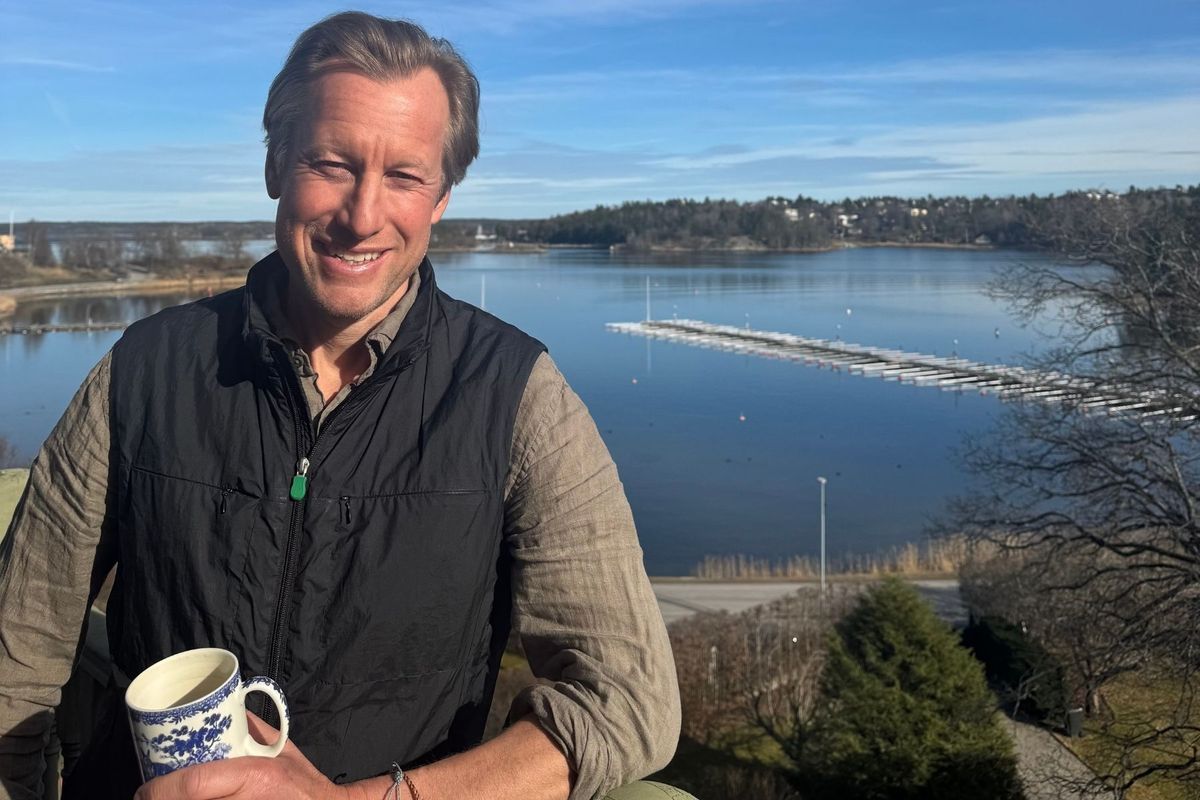
As H&M's former chief executive, Helena Helmersson was the biggest draw at Impact Loop's circular business models meet-up in Stockholm, Sweden last week.
Helmersson has worked in the fast fashion industry at the highest level for over two decades. But now, the sustainable and circular economy is where she wants to operate.
"I love driving change and I want to change this system. So I choose to get involved in companies that have a genuine ambition to make the industry sustainable," she tells Impact Loop.
She currently chairs textile recycler Circulose (formerly Renewcell) and sits on the boards of returns specialist eComid and Swiss sportswear brand On, a serious challenger to Patagonia in the sustainable performance space. She also runs her own consultancy, HELM Movement.
Fashion isn't the villain. The system is.
The fashion and textile industry accounts for close to 10% of global greenhouse gas emissions, and 11% of all plastic waste.
For Helmersson those statistics are an argument for transformation of the industry, not for buying less clothes or being less fashionable.
"Fashion is a form of self-expression and an enormously positive force," she says. "The question is how you make the industry sustainable."
In recent years, some fashion companies have moved towards circular business models. Still, progress has been slow. Textile recycling is the starkest example. The technology exists, but infrastructure to collect, sort and process garments at scale, turning old clothes back into new fibre, does not.
"It usually comes down to building the collaborations needed to change structures across entire systems," says Helmersson. "Very few organisations have the patience and drive to actually make that happen."
Make doing the right thing the easy thing
One of the sharpest lessons from Helmersson H&M years, she says, concerns system design. Buyers are routinely asked to deliver on growth, profitability, and sustainable sourcing at the same time. In practice every order becomes a trade-off.
"It's not straightforward when people are constantly weighing up profitability against sustainability," she says. "You have to change the system so that doing the right thing is the easier thing."
A second lesson: go deep rather than broad. It is easy to identify problems across a value chain and launch initiatives on every front but that spreads effort too thinly.
"On some of these issues you are trying to change real structures, not just inside a company but across a whole society," she says. "That requires real endurance and I think that endurance runs out for a lot of organisations."
Rewrite the rules
Helmersson is unequivocal in her belief that change at company level is not enough. The rules of the game need rewriting.
"If the system changed at a higher level, companies would adapt to the new rules and wouldn't have to invent their own solutions," she says.
Too many businesses still do not treat sustainability as a core commercial question, she adds. When conditions tighten it gets dropped. When they ease it gets picked back up.
"Many companies don't see building that resilience, embedding sustainability into what they offer customers, as a business issue at all," says Helmersson. "That's why I believe legislation and changing the system at a different level is the only way forward."
From beige to backable
She also reflects on how the industry's communication around sustainability has shifted, sometimes painfully in retrospect.
"The first sustainable collection we did at H&M was in the nineties. It was called 'Nature Calling' and it was entirely beige," says Helmersson. "When I think back on it, we learned a lot over the years about the fact that if you want to talk sustainability you have to address customers' real needs."
That holds across every sector, food, cars, clothing alike.
"It has to be good for the wallet. It has to be simple. And it has to deliver real value," she says. "In fashion that means people want to feel good and to wear something that reflects who they are."
Get full access to Europe's new platform for impact news
- Quality journalism, interviews, investor profiles and deep-dives
- Daily newsletter with top stories, latest funding rounds and roundup to keep you in the loop
Keep reading – get in the loop!
- Håll dig i loopen med vårt dagliga nyhetsbrev (gratis!)
- Full tillgång till daglig kvalitetsjournalistik med allt du behöver veta inom impact
- Affärsnätverk för entreprenörer och investerare med månatliga meetups
Fortsätt läsa – kom in i loopen!
- Håll dig i loopen med vårt dagliga nyhetsbrev (gratis)!
- Full tillgång till daglig kvalitetsjournalistik med allt du behöver veta inom impact
- Affärsnätverk för entreprenörer och investerare med månatliga meetups