

How Lightrock and Norrsken de-risked impact investing in Africa: 'It's not as simple as flying down, writing a cheque and going home'
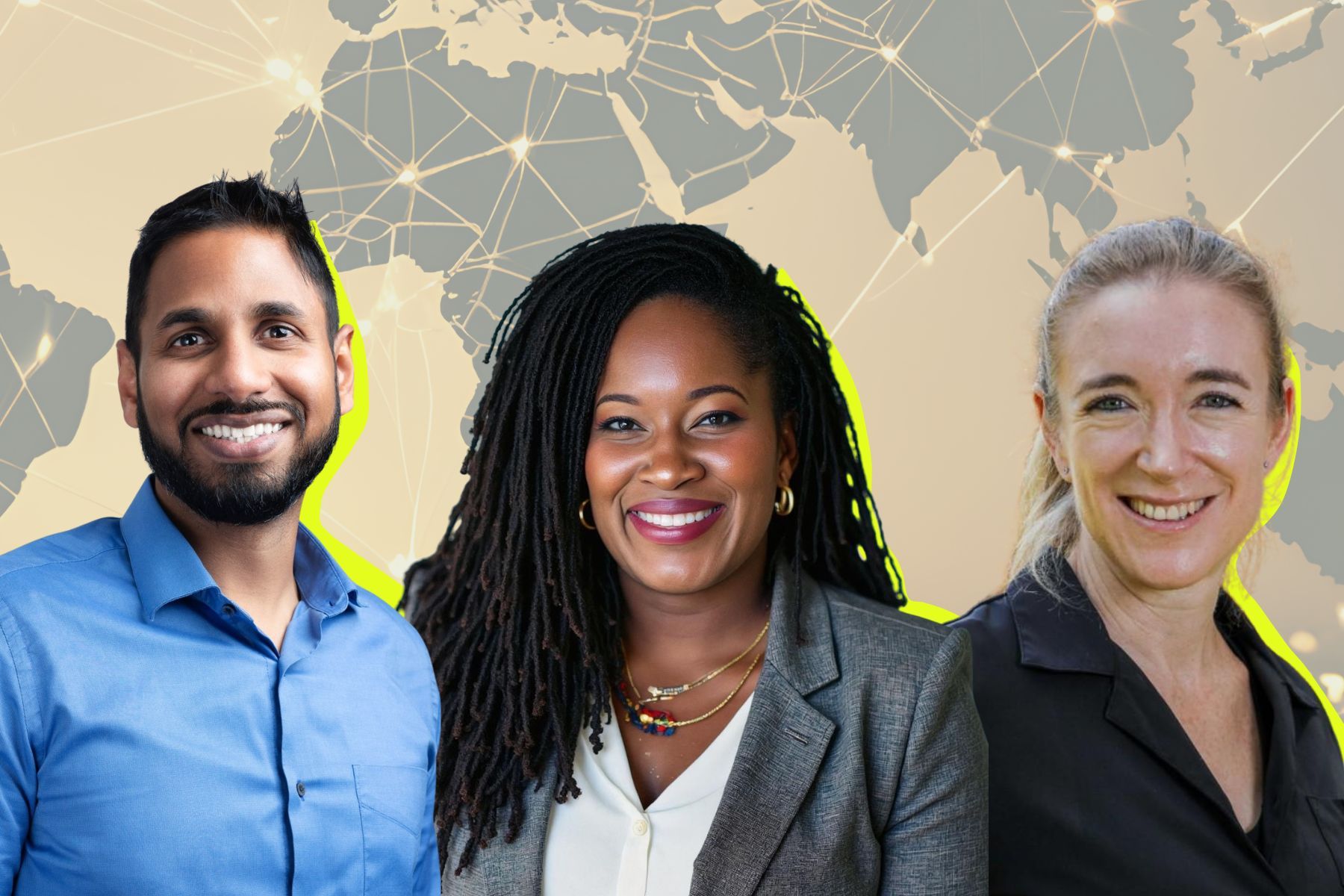
Despite enormous potential for outsized impact and returns, European impact investors often shy away from the African market.<br><br>We spoke to perhaps two of the most notable exceptions, Lightrock and Norrsken22, to dig deep into their Africa investment strategies. <br><br>We cover:<br><br>→ How impact investing in Africa differs from Europe<br>→ What the opportunities look like <br>→ Where the real risks are – and where they're overstated
.png)

Africa accounts for 18% of the global population and 5% of global GDP. In 2024, it attracted just 0.6% of global venture capital – signalling, a significant missed opportunity for European impact investment.
Africa has a young, fast-growing, and increasingly tech-savvy population. It also has big problems, requiring big solutions – and the potential for technology to have outsized impact and returns.
"Most commercially viable businesses [in Africa] are commercially successful because they solve a really large problem for a lot of people," Lightrock partner Arul Thomas tells Impact Loop from the firm’s office in Nairobi, Kenya.
Africa is also leapfrogging legacy infrastructure – like fossil fuel plants or petrol-powered cars – directly to cleaner solutions such as off-grid solar power, mobile money apps, and electric vehicles, creating surging demand for new solutions.
"The level of activity on the continent is insane," Natalie Kolbe, managing partner at Norrsken22, the African investment arm of Sweden's Norrsken Foundation, tells Impact Loop from Johannesburg, South Africa.
For both Lightrock and Norrsken22, "impact investing" in Africa means something different than it does in Europe or the US.
"We don't go to market calling ourselves an impact fund," says Thomas, who co-manages Lightrock’s recently launched Africa fund II. "We feel that the vast majority of the opportunities that we look at are highly impactful, but at the same time commercially successful."
Lightrock’s Africa fund deploys $10–40m equity tickets across energy access, e-mobility, modern cooking, and clean infrastructure in Sub-Saharan Africa, focusing on revenue-generating businesses at the growth stage.
"Never before in history have we ever seen private capital being solely used to build infrastructure, mainly energy infrastructure," says Lizzie Biney-Amissah, Lightrock partner and head of the firm's climate and energy strategy in Africa.

Sun King's solar-powered home energy systems provide light and power to homes for a small monthly installment. The Kenyan company became a unicorn in 2022. Credit: Sun King
Norrsken22 also invests at the late venture, early growth stage. The firm, which closed a $205m fund in 2023, writes average tickets of $10m. However, its focus is more fintech and digital SaaS than renewable energy.
Norrsken22's bets include Taager, an Egyptian e-commerce enablement platform, Raenest, a Nigerian multi-currency payments platform for freelancers, and TymeBank, the digital bank with a $1.5bn valuation.
"Our approach to impact in Africa is very much about entrepreneurship," says Kolbe. "How can we support entrepreneurship and the generation of income so we can lift people out of poverty so that they can then sustain themselves?"
For instance, Taager handles sourcing, logistics, payments, and delivery for merchants at lower income levels. The merchant's only job is to market on social media.
"You can launch with very little," says Kolbe. "You just need to be on social media and then you can earn an income."
Despite the potential, structural barriers remain for international investors looking to deploy capital on the continent. Political instability, currency volatility, regulatory unpredictability, corruption, and the difficulty of repatriating capital have all deterred foreign investment.
However, both firms say the gap between perceived and actual risk is often significant, and have developed concrete frameworks for managing it.
Ways to de-risk impact investments in Africa
The first question any investor should ask, says Kolbe, is where the legal entity is located.
"All of our [portfolio] businesses are domiciled outside Africa," she says. "The shares are held in an offshore entity."
Any sale of shares takes place in that jurisdiction. "The Nigerian administration can't come and say ‘I'm going to block the sale.’"
Local presence is equally important. Africa comprises 54 countries, each with its own regulatory framework, language, and market dynamics.
"There's a real advantage to having feet on the ground and having a team that's got experience investing in and operating businesses on the continent," says Thomas.
International investors often approach Lightrock to access that local knowledge before committing capital. "It's not as simple as flying down, writing a cheque and going home."
Regulation, counterintuitively, may be less of a barrier than investors expect.
Kolbe says regulators in most of Norrsken22's markets allow businesses to operate and develop before formal rules are set.
"The regulators are a lot more open to: let's figure out how we work together. They generally don't over-regulate," she says. Companies can scale faster than in more heavily regulated markets, she says, though she acknowledges that could change.
Sector selection matters too. Corruption risk in Africa is concentrated in certain sectors, says Kolbe, especially those involving government contracts, mineral extraction, and large infrastructure tenders.
"Our businesses aren't doing that," says Kolbe. "We're dealing with commercial private businesses and private clients."
Another barrier deterring some investors from betting on Africa is the exit market. The buyer pool is smaller, local stock exchanges are less liquid, and IPO options have been limited compared to more developed markets. That is changing, according to Thomas.
"In the last 12 months, we've seen a very successful IPO in South Africa with Optasia, which listed at $375m on the JSE," he says. "That really opens the doors for many businesses of a similar scale and a similar profile, which traditionally would have looked in New York or London for listing."
Strategic acquisitions by both global and African companies have also increased, he says, with a secondaries market beginning to develop.
"I've seen more secondaries, both GP-led and LP-led, in the last eight to twelve months than I've seen in the four years before that," says Thomas.
There were 138 venture-backed exits across Africa between 2019 and 2024, with the trend rising over the period, though remaining flat in 2024, according to data from the African Private Capital Association (AVCA).
For LightRock's energy portfolio, exits follow a longer timeline.
"We see our role as bridging the gap between VC funding to full-scale project finance, big portfolio that can be acquired," says Biney-Amissah.
The firm begins identifying potential acquirers at the deal origination stage, Biney-Amissah says, knowing that energy infrastructure businesses take longer to reach transaction-ready scale.
The macro picture
The policy environment is also shifting in ways that both firms say are creating tailwinds. Ethiopia has banned ICE vehicle imports and subsidised EVs heavily. Rwanda has banned ICE motorcycles in Kigali. Lagos has followed. "You're starting to see this domino effect," says Biney-Amissah, "as countries sit up and recognise that their energy security is not necessarily in their hands."
In South Africa, years of rolling power cuts have been resolved through private-sector renewable buildout, not state investment. "We didn't go on a renewable energy journey because we were worried about the climate," says Kolbe. "We went because we didn't have a choice."
Clean and climate tech doubled its share of tech-enabled deal volume in Africa in 2024, per AVCA. African startups raised $4.1bn in combined equity and debt in 2025 – the strongest year since 2022, according to a report by venture capital firm Partech.
There are, of course, headwinds. There’s a dearth of capital at the early stages, says Biney-Amissah, made worse by the US withdrawal from multilateral climate finance.
Biney-Amissah points specifically to the closure of Power Africa and Prosper Africa – two US government-backed programmes that provided grants and concessional capital to African energy businesses – as leaving a gap that has yet to be filled.
For now, the capital gap between Africa's potential and its share of global venture investment remains stark. "There's more opportunities than there is capital, without a doubt," says Kolbe.
Get full access to Europe's new platform for impact news
- Quality journalism, interviews, investor profiles and deep-dives
- Daily newsletter with top stories, latest funding rounds and roundup to keep you in the loop
Keep reading – get in the loop!
- Håll dig i loopen med vårt dagliga nyhetsbrev (gratis!)
- Full tillgång till daglig kvalitetsjournalistik med allt du behöver veta inom impact
- Affärsnätverk för entreprenörer och investerare med månatliga meetups
Fortsätt läsa – kom in i loopen!
- Håll dig i loopen med vårt dagliga nyhetsbrev (gratis)!
- Full tillgång till daglig kvalitetsjournalistik med allt du behöver veta inom impact
- Affärsnätverk för entreprenörer och investerare med månatliga meetups
More articles:

Novo Holdings makes €40m bet on superconductors for fusion energy, power grids