How to get family offices to back your impact fund – tips from a German dynasty
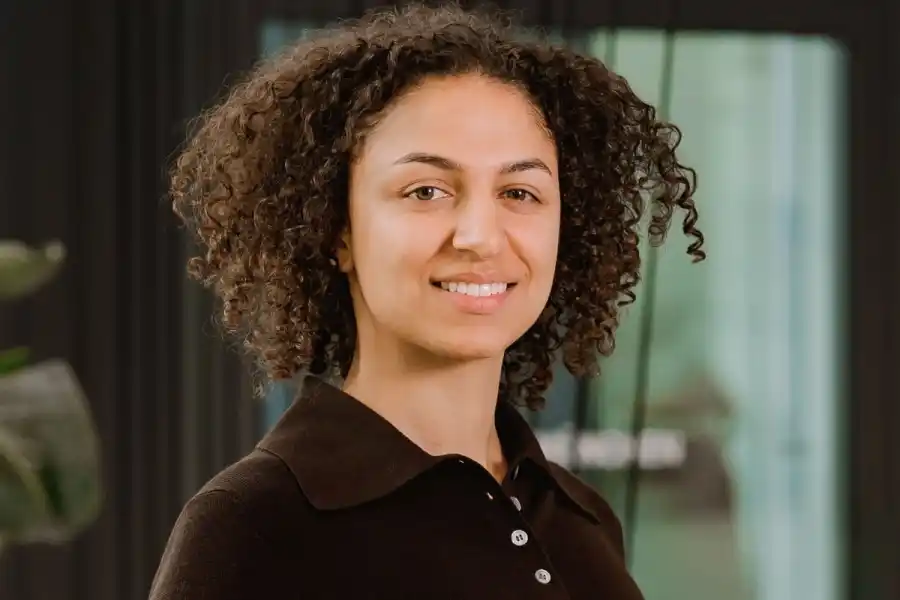
The Goldbeck family's impact vehicle has backed 19 funds and plans up to five more deals this year.<br><br>We asked its fund investor Kelley Luyken exactly what the firm is looking for in a impact fund manager.<br><br>Get the lowdown on:<br>→ How to get in front of family office capital, even without a warm intro <br>→ What Aurum Impact looks for in a fund manager – and what quietly kills a deal<br>→ The rising movement of patient capital for impact
.png)
When Kelley Luyken joined Aurum Impact two years ago, the firm had only just launched. Now it has built a portfolio of 19 funds and is one of the most active family office LPs in European impact investing.
Aurum is the dedicated impact arm of the Goldbeck family – one of Germany's largest construction and real estate groups. The vehicle operates differently from a traditional fund. There are no external LPs, no fixed fund size, and no quarterly fundraising pressure.
That independence, Luyken argues, is precisely what makes family offices such important sources of capital right now.
"One of the privileges that we have as a family office is that we don't need to go along with hype cycles," she tells Impact Loop in an interview. "We have a family that stands behind us that has a sense of responsibility toward future generations."
That stability matters more than ever. As institutional LPs pull back from impact and climate mandates, family offices are stepping in. Luyken sees a growing network of like-minded capital across Europe.
A growing movement
Across Europe, hundreds of family offices including Belgium's Victrix, food-focused The Nest, and Danish holding company Chr. Augustinus Fabrikker – which has reportedly committed around €150m to impact vehicles – are building some of the most active LP portfolios in the space.
"I think there are actually more family offices becoming interested in impact investing and allocating more to it," she says. "There's quite a bit of buzz happening on that side."
Aurum makes four to six direct investments per year at ticket sizes of €500K to €2M, targeting climate and energy, circularity and materials, natural ecosystems, and what it calls stable and equitable societies.
Recent direct investments include Oscar Health, a German startup building a coaching system for people with chronic kidney disease, and battery storage scaleup Voltfang.
On the fund side, it writes cheques of €1m to €10m, targeting four to six investments per year. It already backed SlateVC earlier this year, and is looking to add a handful more before December.
Its existing portfolio includes Planet A, Revance Capital, Breakthrough Energy Ventures, Counteract, and Voyager Ventures – a mix of European and transatlantic impact funds across climate, circularity, and deep tech.
Getting a foot in the door
For impact fund managers trying to get on Aurum's radar, Luyken is open about the process. The first thing she says: don't cold-pitch.
"Most LPs absolutely do not take inbound openly," she says. "I would very much recommend trying to get warm introductions."
Relationship-building comes before the ask. Aurum likes to get to know managers over time – ideally through deal exchange, where a fund shares a direct investment opportunity before any LP conversation begins. It signals alignment and gives both sides a chance to see how the other operates.
While connections are crucial, Luyken recognises that reliance of warm intros can restrict the pool of talent visible to LPs, especially if fund managers are from underepresented groups or new to the space.
For those without an existing connection, Luyken points to a few practical routes in.
European Women in VC and Impact Europe both run LP office hours – settings where managers can hear directly what investors want without needing a prior relationship.
"Those have also been sources for us to get to know a fund that we did not have on our radar before," Luyken says.
Three top tips for VCs
Beyond access, Luyken is looking for three things once a manager is in the room.
The first is track record. Even first-time managers need evidence of being able to back good companies, whether through prior angel investing, operator experience, or a role at an earlier fund. "I would not recommend making a fund otherwise," Luyken says.
The second key requirement is a clear investment thesis. Not a hype-chasing mandate, but a considered view of where the most important problems and the best opportunities sit.
"Some funds are actually starting to include things – not even in their thesis, but rather opportunistically – that are not impact at all," Luyken says, pointing to formerly climate-focused managers investing more in AI, defence, and robotics. "If we take a closer look, [these investments] are not necessarily making progress on the issues we want to fund."
However, labels matter less than the content of a VC’s portfolio, she says. For instance, Aurum backs US funds that never called themselves impact funds, provided the underlying companies are doing meaningful work.
"We really appreciate seeing a thesis-driven approach that shows there is thinking around what the most relevant investment areas are, independently of what current hype cycles might be," Luyken says.
The third is co-investor quality. Aurum scrutinises previous portfolios not just for returns, but for the calibre of investors alongside.
Uniting family offices in impact
Aurum's ambitions extend beyond its own portfolio.
The firm is actively working to convene European family offices around a shared impact investing agenda – and sees that coordination as one of the most practical things the space can do right now.
One concrete initiative is a joint DDQ: a standardised due diligence questionnaire that a fund manager fills out once, usable by multiple family offices simultaneously.
"Currently, every LP has a different set of requirements, a different set of DD questions," Luyken says. "We're trying to streamline our interests so that if a fund manager fills something out one time, lots of different family offices can benefit from that information at once."
The goal is also to set shared standards – on impact measurement, on reporting, and on what family offices collectively want to ask of managers. It is an attempt to give the asset class more structural coherence, and more influence.
For fund managers who do break through, Luyken encourages them to use connections actively.
"If you end up having contact with an LP, feel free to ask: are there others in your network that you can introduce me to?" she says. "We are oftentimes happy to make introductions to some of the other LPs that we're in contact with – there is a group of like-minded people who are always looking for first-time managers, diverse managers."
For impact managers navigating a difficult fundraising environment, that network – and the patient capital behind it – may be one of the more valuable things in European VC right now.
Get full access to Europe's new platform for impact news
- Quality journalism, interviews, investor profiles and deep-dives
- Daily newsletter with top stories, latest funding rounds and roundup to keep you in the loop
Keep reading – get in the loop!
- Håll dig i loopen med vårt dagliga nyhetsbrev (gratis!)
- Full tillgång till daglig kvalitetsjournalistik med allt du behöver veta inom impact
- Affärsnätverk för entreprenörer och investerare med månatliga meetups
Fortsätt läsa – kom in i loopen!
- Håll dig i loopen med vårt dagliga nyhetsbrev (gratis)!
- Full tillgång till daglig kvalitetsjournalistik med allt du behöver veta inom impact
- Affärsnätverk för entreprenörer och investerare med månatliga meetups


