One female VC partner is tokenism. Two actually shift the conversation.
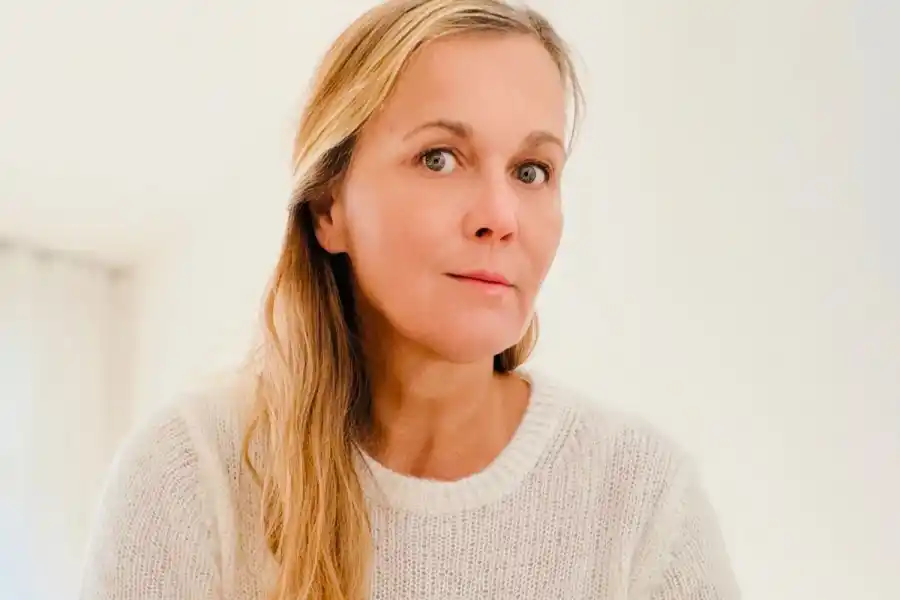
One female partner is unlikely to shift the balance of power in a venture capital firm. Two or more is when you see real change, argues Doreen Rietentiet, CEO and founder, Elevate2Impact.
Venture capital likes to think of itself as the business of the future. Yet on gender, it still reflects the past.
Despite two decades of conversation about diversity, women remain dramatically underrepresented at the partner level in VC firms globally. In the United States, women make up roughly 15–18% of decision-making partners at venture firms, according to PitchBook data. In Europe, the figure hovers around 15–20%, depending on the market. In many funds, that translates to exactly one woman at the table, if any. And that structural reality has measurable consequences.
'One woman is not enough to meaningfully shift capital allocation patterns'
Interestingly, the impact ecosystem appears to be moving faster. Impact Loop recently reported that nearly 30% of European impact VCs have a female founding partner, roughly six times the broader industry average.
That's particularly significant because funds investing in climate, energy systems, health innovation, and social infrastructure are financing the industries that will define the next decades.
However, if the impact and VC community is really serious about reshaping markets, funding climate innovation, health equity, financial inclusion, and education access, then it must confront the simple governance truth that one woman in a partnership is not enough to meaningfully shift capital allocation patterns. A minimum of two begins to change the system.
The game theory of influence
Game theory helps clarify this. Influence in collective decision-making depends on coalition-building. A lone dissenting voice faces high coordination costs and reputational risk.
Two actors, however, can validate each other's perspectives, raise questions without appearing idiosyncratic, disagree publicly, normalising diversity within diversity, and form coalitions around specific deals or theses.
With two women partners, the power balance shifts. A deal involving a female founder is no longer perceived as "her deal." It becomes subject to debate on strategic merits, not reduced to identity alignment.
The financial cost of homogeneous decision-making
When most decision-makers are men, pattern recognition easily becomes pattern repetition. However, several of Europe's most heavily funded, high-profile startups, overwhelmingly male-founded and backed by predominantly male investment committees, have collapsed or dramatically restructured after burning through billions in capital.
Many of Europe's largest venture bets of the past cycle followed a similar pattern: hyper-growth models backed by investment committees that looked remarkably alike.
Europe's 2020–2022 funding boom poured unprecedented capital into hyper-growth models, with annual investment exceeding $100bn at its peak. Many of these funding rounds were led by young, male founders scaling aggressively with "winner-takes-all" narratives. When market conditions shifted, many of these companies proved structurally fragile.
'Diversity at the partner level is portfolio risk management'
The point is not that male founders fail. Failure is intrinsic to venture capital. The point is that pattern concentration magnifies systemic risk. Diverse decision-making bodies tend to interrogate assumptions more rigorously. Research from Harvard Business Review, McKinsey & Company and Boston Consulting Group consistently finds that heterogeneous teams evaluate risk more rigorously and produce better innovation outcomes. In an ecosystem where billions of euros have evaporated, governance is capital protection.
If European venture capital wants to reduce systemic overexposure to a single founder archetype or growth doctrine, increasing diversity at the partner level is portfolio risk management.
And again, one woman in the room does not fundamentally alter that dynamic. She can question. She can caution. But she cannot easily rebalance momentum alone.
From tokenism to real change
One female partner is optics. Two women partners begin to change conversational dynamics. Three or more normalise diversity and reduce the cognitive burden of representation altogether.
If venture capital is about shaping the future economy, then its own governance structures must reflect that ambition. For impact-focused funds especially, the call is straightforward:
- Design partnerships where no woman sits alone at the table.
- Ensure equal economics and voting rights.
- Measure not just portfolio diversity but decision-maker diversity.
The VC industry has spent years asking why capital doesn't flow equitably, why more female founders aren't getting funded. But who is actually deciding where it goes?
If venture capital truly sees itself as the architect of the future economy, then it must modernise its own power structures.
Two women at the table will not solve the industry's gender diversity problem, but it is the point where female influence starts to become a bit more structural.
Get full access to Europe's new platform for impact news
- Quality journalism, interviews, investor profiles and deep-dives
- Daily newsletter with top stories, latest funding rounds and roundup to keep you in the loop
Keep reading – get in the loop!
- Håll dig i loopen med vårt dagliga nyhetsbrev (gratis!)
- Full tillgång till daglig kvalitetsjournalistik med allt du behöver veta inom impact
- Affärsnätverk för entreprenörer och investerare med månatliga meetups
Fortsätt läsa – kom in i loopen!
- Håll dig i loopen med vårt dagliga nyhetsbrev (gratis)!
- Full tillgång till daglig kvalitetsjournalistik med allt du behöver veta inom impact
- Affärsnätverk för entreprenörer och investerare med månatliga meetups


