

This Stockholm startup built a 'fungi army' that eats diesel for lunch – lands €1.9m
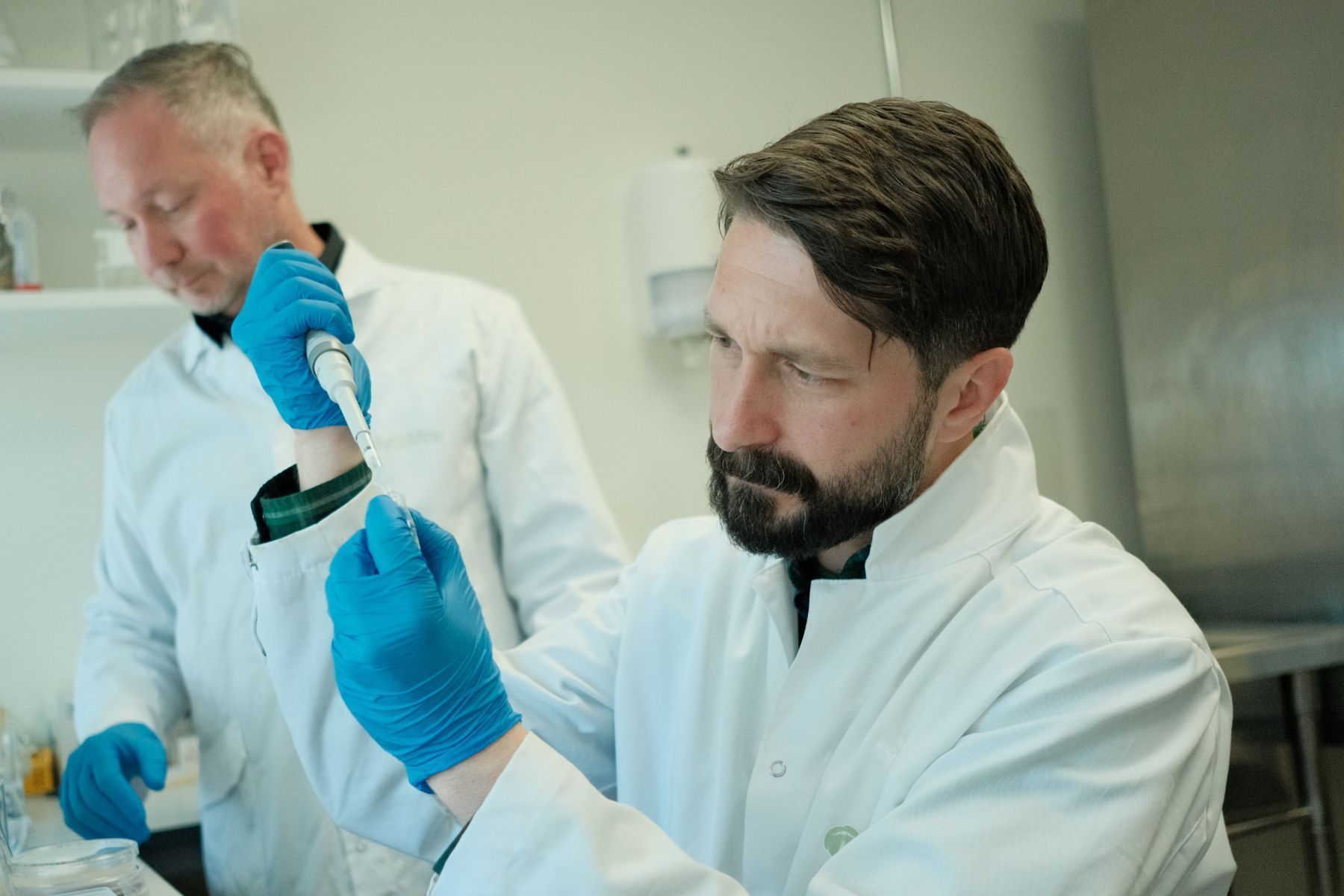
Stockholm-based Mycomine has quietly assembled a library of 100 fungi strains, each trained to tackle different pollutants. <br><br>With almost €1.9m in funding from Swedish angels and a family office, it's now putting the fungi to work – to 'eat' diesel, crude oil – and maybe even PFAS.


Fungi are having a moment in European climate tech. We've seen startups using mushroom protein for everything from animal feed to luxury handbags. But Swedish company Mycomine wants its fungi to do something rather different: devour diesel, crude oil – and possibly even PFAS.
The Stockholm-based startup has spent recent years quietly building a "bank" of around 100 fungal strains, each specialising in breaking down different types of contamination.
"There's been theoretical knowledge for decades that fungi should be able to do this," CEO and founder Magnus Ivarsson tells Impact Loop. "But we've focused on application. We've sampled from contaminated sites, hunted down the right fungi, screened them for effectiveness – then deployed them in our treatment systems."
Aims for total breakdown
Mycomine's solution is a portable treatment unit housed in a shipping container, which can be delivered to a customer site and plugged in. Unlike conventional remediation methods, which typically move contaminated soil elsewhere for treatment or incineration, Mycomine aims for total breakdown on-site.
"We don't want to shift pollution from one place to another – we want to eliminate it completely," says Ivarsson.
The fungi essentially consume the contaminants and convert them into biomass. According to the company's calculations, this can slash both costs and carbon emissions compared to traditional treatment of oil-based pollution.
"By converting contaminants into biomass, we're sequestering carbon," Ivarsson explains. "In some cases, customers can reduce their CO2 emissions by up to 96%, whilst cutting costs by as much as 60%."
Training fungi in extreme environments
Simply collecting fungi isn't enough – they need to be trained. Mycomine has deliberately sought out fungi from extreme environments, precisely because they tend to be highly adaptable.
"We've found them in unexpected places – contaminated sites, refineries, the seabed, even Stockholm's underground system – places you wouldn't expect life to exist. That's exactly why they're so adaptable," says Ivarsson.
The company cultivates and trains these fungi in controlled bioreactors before deployment.
€1.9m to scale
Mycomine has just closed its first external funding round of almost €1.9 million (20m SEK), Impact Loop can reveal.
"We got a decent sum because our strategy worked: we've shown that customers want to test this – and will actually pay for it," says CFO Björn Ohlsén, who co-founded the company alongside Ivarsson and CTO Kristoffer Palmgren.
The trio deliberately held off raising external capital, instead building the business through paying pilot customers and grants, including from Swedish innovation agency Vinnova.
"Partly because we wanted to test things out without investors demanding immediate profitability, partly because we wanted to prove this actually works," Ohlsén explains.
The funding will go towards scaling up: developing a larger version of the treatment unit, expanding the lab fourfold, and growing the team from seven to around 12 people by 2026.
Patient capital for a slow-moving sector
Rather than pursuing a traditional VC round, Mycomine has opted for a small investor circle. Backers include Emred (owned by Swedish e-com profile Magnus Emilson), the family office of the Walerud family via Bengt Walerud, plus smaller cheques from additional angels. Stockholm accelerator Sting, where the company was based, also invested.
Ohlsén says they needed patient capital – because the contamination remediation sector isn't exactly known for moving quickly.
"We're aware the market can be sluggish. There are old habits and traditions to break. Many are used to 'a lorry turns up' to collect waste, or contamination going off to incineration," he says.
The PFAS opportunity
Mycomine is also exploring whether its fungi can tackle PFAS – the so-called "forever chemicals" that persist in the environment. It's an increasingly crowded space, with new EU regulations imposing stricter limits coming into force at year-end.
For Mycomine, the PFAS angle remains experimental – but if successful, it could open up a big market. For now, the company's focus is on refineries and oil depots, property owners responsible for contaminated land, plus manufacturing industries that currently ship large volumes of waste off-site.
"That's where we see big potential," says Ohlsén.
Get full access to Europe's new platform for impact news
- Quality journalism, interviews, investor profiles and deep-dives
- Daily newsletter with top stories, latest funding rounds and roundup to keep you in the loop
Keep reading – get in the loop!
- Håll dig i loopen med vårt dagliga nyhetsbrev (gratis!)
- Full tillgång till daglig kvalitetsjournalistik med allt du behöver veta inom impact
- Affärsnätverk för entreprenörer och investerare med månatliga meetups
Fortsätt läsa – kom in i loopen!
- Håll dig i loopen med vårt dagliga nyhetsbrev (gratis)!
- Full tillgång till daglig kvalitetsjournalistik med allt du behöver veta inom impact
- Affärsnätverk för entreprenörer och investerare med månatliga meetups