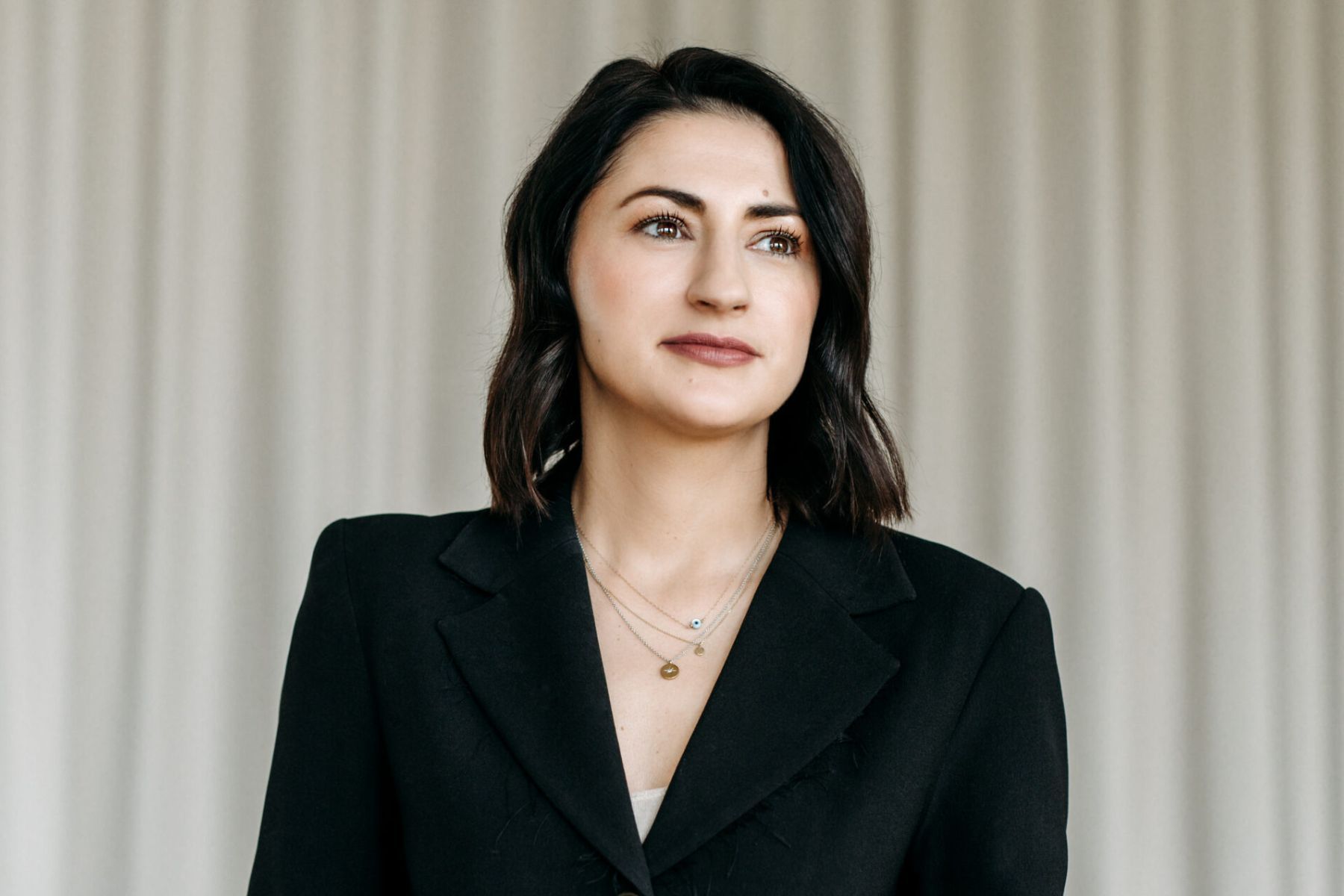


Early investor reacts to IQM’s $1.8bn IPO plans: ‘SPACs are re-emerging as a more refined tool’

Earlier this week, quantum company IQM announced its plans to go public at a reported $1.8bn valuation via a SPAC merger. <br><br>"There was a period when SPACs were extremely trendy, and then their reputation declined. Now, I think we’re seeing them re-emerge as a more refined tool," Daria Saharova, founding partner at World Fund, one of IQM’s earliest backers, tells Impact Loop. <br><br>
.png)

IQM is set to become Europe’s first public quantum computing company – and the first exit for World Fund.
World Fund led IQM’s €128m Series A in 2022 in what was the Berlin-based fund’s first major investment after its launch a year prior.
“Quantum computing holds the potential to drive the breakthroughs needed to help solve the climate crisis,” Daria Saharova, founding partner at World Fund, said at the time.
IQM plans to go public via a Special Purpose Acquisition Company (SPAC), a route to public markets that peaked in 2021 before rising rates and missed projections triggered heavy losses.
Now, after a sharp reset, SPACs are edging back into favour, especially in capital-intensive deep tech.
In November, electric freight startup Einride announced its plans to go public through a SPAC merger. In the quantum space, US company Infleqtion IPO’d via a SPAC in February, while Canadian firm Xanadu Quantum Technologies plans to go public via the same route by the end of March.
To better understand the trend – and IQM’s plans – we caught up with World Fund's Saharova, who also shared some strong opinions on why European firms keep choosing to list overseas.
This interview has been edited for length and clarity.
Why did IQM decide to go public now?
Probably two reasons that intersect and amplify each other.
First, IQM has already sold the most systems commercially – admittedly in small numbers compared to more mature industries, but significant for this stage of the nascent quantum sector.
Second, if you look at IQM’s US-listed quantum peers, they’ve been trading publicly for some time now. This isn’t just short-term hype – there’s been consistent momentum in how the market values these kinds of companies.
The paradigm shift in compute is increasingly understood. So the question becomes: if you’re confident in your position, why not go public?
IQM is going public via a SPAC. How do you view that route?
There was a period when SPACs were extremely trendy, and then their reputation declined. Now, I think we’re seeing them re-emerge as a more refined tool. Adjustments have been made in response to market feedback.
For companies like IQM, a SPAC can offer a faster process and more flexibility around the float. And it doesn’t prevent you from moving to a more traditional listing structure over time.
There are, of course, regulatory and compliance adjustments required of any public company. But as an initial step, a SPAC can be an efficient way to enter the public markets quickly while continuing to prepare for the long term.
How do you feel about another European company listing in the US?
The ambition is a dual listing, one in New York and another in Helsinki, Finland. There is capital available in the region, and that’s important.
That said – and this may not be a popular opinion – as long as Europe doesn’t have a unified, strong capital market with tech-literate retail investors, companies building global category leaders have limited options.
If you want to avoid a “European discount” in your valuation, there are only a few exchanges that can provide the right visibility and liquidity. Nasdaq is one of them.
I’m a huge believer in European technology. But if we want to build sovereign, globally competitive companies, we also have to think globally – including when it comes to listings.
For a climate and deep tech VC like World Fund, is IPO the preferred exit route?
Every VC dreams of IPOs – the unicorn, the Nasdaq listing. But the reality is that only a small number of companies qualify. You need to meet very strict criteria to succeed as a public company.
That’s why M&A remains an extremely important channel, especially in the sectors we invest in – industrial tech and decarbonisation across energy, industry, food, and agriculture. Many of these are trillion-euro industries in transition, and incumbents urgently need innovation. They can be natural acquirers for startups.
We also shouldn’t underestimate the value of smaller exits. A €50m or €250m exit still recycles capital into the ecosystem. Founders and employees go on to build again.
What would the listing mean for your firm?
For us, as a first-time fund, having what could become our first exit, via a Nasdaq IPO, is very exciting – assuming everything goes to plan.
I genuinely believe IQM is one of the best quantum companies globally. Compared to US peers, there is still room for significant value appreciation.
Are you hoping for more big exits from your portfolio?
The larger your fund, the larger your required outcomes, so as a €300m fund, we need companies that can return the money to LPs.
So we will continue looking for big category leaders like IQM, while recognising that Europe needs a mix of outcomes to build a resilient, decarbonised economy.
For now, though, the focus is on IQM – and what could be a landmark public debut for one of Europe’s most ambitious quantum players.
Get full access to Europe's new platform for impact news
- Quality journalism, interviews, investor profiles and deep-dives
- Daily newsletter with top stories, latest funding rounds and roundup to keep you in the loop
Keep reading – get in the loop!
- Håll dig i loopen med vårt dagliga nyhetsbrev (gratis!)
- Full tillgång till daglig kvalitetsjournalistik med allt du behöver veta inom impact
- Affärsnätverk för entreprenörer och investerare med månatliga meetups
Fortsätt läsa – kom in i loopen!
- Håll dig i loopen med vårt dagliga nyhetsbrev (gratis)!
- Full tillgång till daglig kvalitetsjournalistik med allt du behöver veta inom impact
- Affärsnätverk för entreprenörer och investerare med månatliga meetups
More articles:

Climate tech startup Paebbl appoints ex-Tesla exec to lead commercial plant build out