

Elena Doms is bringing billionaire-backed Oxygen Conservation to Europe: 'Big demand from institutional investors'
In the UK, Oxygen Conservation is rapidly buying-up vast tracts of land to restore them and then make a profit from selling 'premium' carbon credits.<br><br>The firm, backed by a British billionaire, is now expanding to Europe – with sustainability expert and LinkedIn influencer Elena Doms at the helm. <br><br>I sat down with Doms to discuss:<br><br>-> Her journey into natural capital investment<br>-> Oxygen's European expansion and plans for a new capital raise <br>-> And why she thinks we need to put a price-tag on nature<br><br><br>
.png)

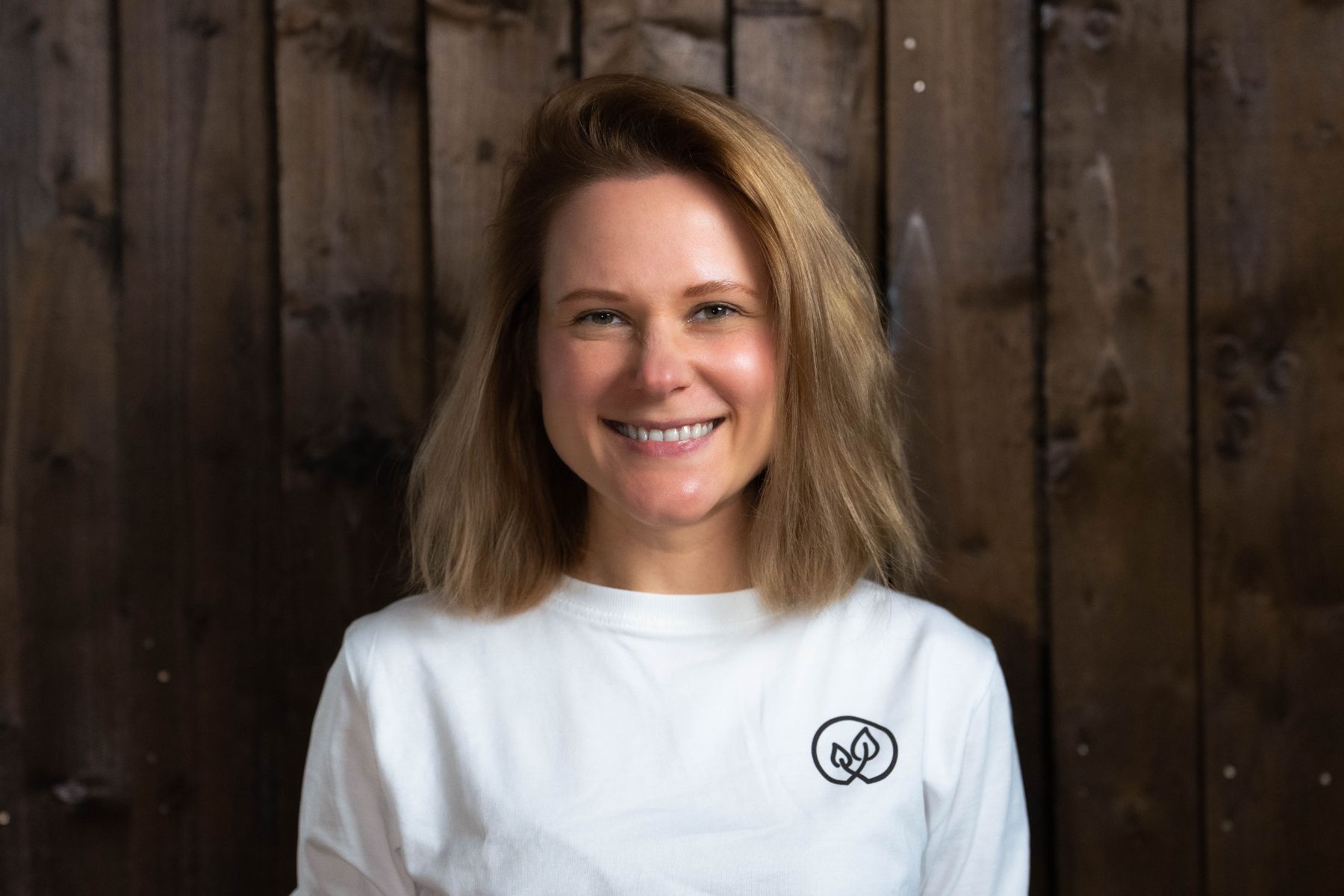
Elena Doms joins the call from Belgium, where she is based, but our conversation quickly turns north.
Doms, 37, grew up in the Russian Arctic where winters meant minus 30 degrees celsius, almost constant darkness, and rivers frozen thick enough to drive across.
"Growing up in the Arctic gave me an immense appreciation for nature that I still have today," she tells me.
Doms's career path is far from linear. She started out at AIESEC, a youth empowerment NGO, before moving into ESG for more than a decade at Mastercard. After that, she wrote a book on CEOs and some where in between became a LinkedIn influencer, popular for her sustainability-in-one-minute video series.
Doms is very open about why she actively built a following of over 100,000 on the social media platform.
"I knew I was really capable, but I couldn't find a job with the impact I wanted," says Doms, who also paints Arctic scenes in her spare time. "You can be the best at what you do, but if nobody knows about you, nobody will hire you."
The LinkedIn strategy worked. Doms was appointed director of Europe at Oxygen Conservation in February, which she says was the result of "putting myself out there."
In the new role, Doms will be responsible for raising the billionaire-backed company’s first external capital raise – targeting over £100m (€115m) from family offices, private equity, and institutional investors, Impact Loop understands.
Now all she has to do is convince European investors that degraded peat bogs and abandoned farms are, in fact, a serious asset class.
Pricing nature to save it
Conservation has long been territory of philanthropists, NGOs, or dedicated landowners. But in recent years an increasing number of private investors have entered the space, lured by the profit potential of natural capital investment, a concept which aims to put a market-based price on natural assets such as soil, forests, water, air, biodiversity, and minerals.
"Many people say nature is priceless and we shouldn't price it," says Doms. "But the problem is that under our economic system then it's considered worthless – and then nothing gets done to protect it."
The UN's latest state of finance for nature report found that for every $30 invested in nature destruction, just $1 goes towards restoration. Meanwhile, scientists estimate the world needs to deploy $700bn per year globally to sustainably manage biodiversity and halt the destruction of ecosystems and species. Over 70% of wildlife populations have been eradicated since 1970 in what has been dubbed the “sixth mass extinction.”
Doms believes getting private and institutional investors to channel more capital into nature will be key to conserving the nature we have left – and restoring that which is already degraded.
Demand from the investment community is there, she says, but the supply of verifiable projects is lacking.
“Institutional investors are looking to invest in natural capital, but there just aren't enough large, high-quality nature restoration projects for them to invest in,” she says. "There is a big gap between environmental ambition and investable delivery.”
Billionaire backing
Oxygen Conservation was founded in 2021 by English environmentalist-turned-entrepreneur Rich Stockdale, to cater to the growing natural capital market.
Oxygen buys land and then actively restores it through activities such as tree-planting or, in some cases, opts for the more passive process of rewilding, where land is left to naturally regenerate. The company has also bought a few working farms and converted them to regenerative agriculture.
In under five years, Oxygen says it has reached roughly £400m (€463m) in assets under management across more than 50,000 acres of land in the UK.
Oxygen has grown rapidly without any venture capital. That’s largely thanks to the backing of Monaco-based English billionaire businessman Mark Dixon who established Oxygen Conservation's parent company Oxygen House Group in 2008.
Oxygen Conservation has also received significant investment from prominent British gambling billionaire Tony Bloom. And in 2023, it took out a £20.5m loan from “sustainable” lender Triodos Bank to help fund large-scale land acquisitions in Scotland.
‘Premium’ credits
Oxygen generates profits from the sale of “premium” carbon and biodiversity credits to organisations or governments looking to offset their emissions or negative impacts on nature. The company also generates additional income from agriculture, property rental, renewable energy production, and ecotourism on the land it owns.
Last year, UK law firm Burges Salmon signed a carbon credit purchase deal with Oxygen valued at around £1m (€1.1m). The purchase is for a volume of 8,000 carbon credits priced at £125 (€144) per tonne.
Throughout our conversation, Doms is careful to distinguish between Oxygen’s “premium” credits and other “low quality” credits on the market.
"Premium credits are undersupplied and everyone wants them,” Doms says. “At the same time, there's an oversupply of credits you simply cannot identify.”
Oxygen's carbon credits sit under the UK Woodland Carbon Code and Peatland Code, which are independently verified and supported by the UK government. Oxygen also supplies Biodiversity Net Gain (BNG) credits, which the UK government buys and sells to developers who can then offset the damage they’ve done to wildlife habitat during, for example, a construction project.
The restoration Oxygen undertakes is, Doms is keen to stress, a mosaic – peatland, native woodland, grassland, river management – not a monoculture of tree planting.
"It is so misunderstood about our projects,” she says. "It's not a one-species, cookie-cutter approach."
After a period of rapid growth, Oxygen is looking to bring its model over the channel and to mainland Europe.
Europe expansion
Doms’ appointment came in response to increasing interest from European institutional investors in Oxygen’s projects, she says.
The expansion is being done carefully. Right now, Oxygen is in what Doms calls "listening mode" – talking to investors, local partners, and credit off-takers, running legal screens across different jurisdictions.
Each European market has its own land tenure rules, regulatory frameworks, and credit methodologies, and the plan is explicitly not to replicate the UK model wholesale across an entire continent at once, she says.
Priority regions include Western Europe – France and Spain – followed by the Nordics and potentially the Baltics.
"The goal is to form a cluster in one area first, where we have credible local partners that can execute at scale," she says. "Then we take it to the next location."
The first land acquisitions are targeted for late 2026 or early 2027, funded through a “hybrid” capital raise targeting family offices, private equity, and institutional investors. While the company declined to comment on the raise further, Doms' LinkedIn job description refers a "external institutional capital" raise of £100m (€115m) or more.
Overcoming the credibility issue
The voluntary carbon market has spent the last few years digging itself out of a reputational hole, following a wave of investigative reporting which exposed how easily credits could be generated with little genuine impact behind them.
"Of course there were a lot of scandals in the market," Doms acknowledges. "So environmental integrity is really key.”
Some of Oxygen’s projects have already faced pushback from local communities. As detailed in a recent article in The Guardian, a representative from a community action group in Scotland questioned Oxygen Conservation's speedy land accumulation and whether its profit focus would actually lead to sustainable nature restoration over the long term.
Doms declined to comment on the accusations, directing me instead to Oxygen’s spokesperson Elly Steers.
“We are not acquiring land to exclude – we are building long-term partnerships with local communities, land managers, and ecologists,” Steers says, adding that she believes “unanimous support for significant land management change is rarely achievable.”
I ask Doms whether she thinks carbon markets can ever be more than a mechanism for deferring emissions rather than cutting them.
"Carbon credits are just one piece of the puzzle,” she replies. “The question is: how do we have more regenerative businesses with bankable projects at institutional scale, so investors can actually put capital to work? That's the gap we need to close."
Get full access to Europe's new platform for impact news
- Quality journalism, interviews, investor profiles and deep-dives
- Daily newsletter with top stories, latest funding rounds and roundup to keep you in the loop
Keep reading – get in the loop!
- Håll dig i loopen med vårt dagliga nyhetsbrev (gratis!)
- Full tillgång till daglig kvalitetsjournalistik med allt du behöver veta inom impact
- Affärsnätverk för entreprenörer och investerare med månatliga meetups
Fortsätt läsa – kom in i loopen!
- Håll dig i loopen med vårt dagliga nyhetsbrev (gratis)!
- Full tillgång till daglig kvalitetsjournalistik med allt du behöver veta inom impact
- Affärsnätverk för entreprenörer och investerare med månatliga meetups