

Foxway founders launch investment firm – and they're not backing 'hype' startups
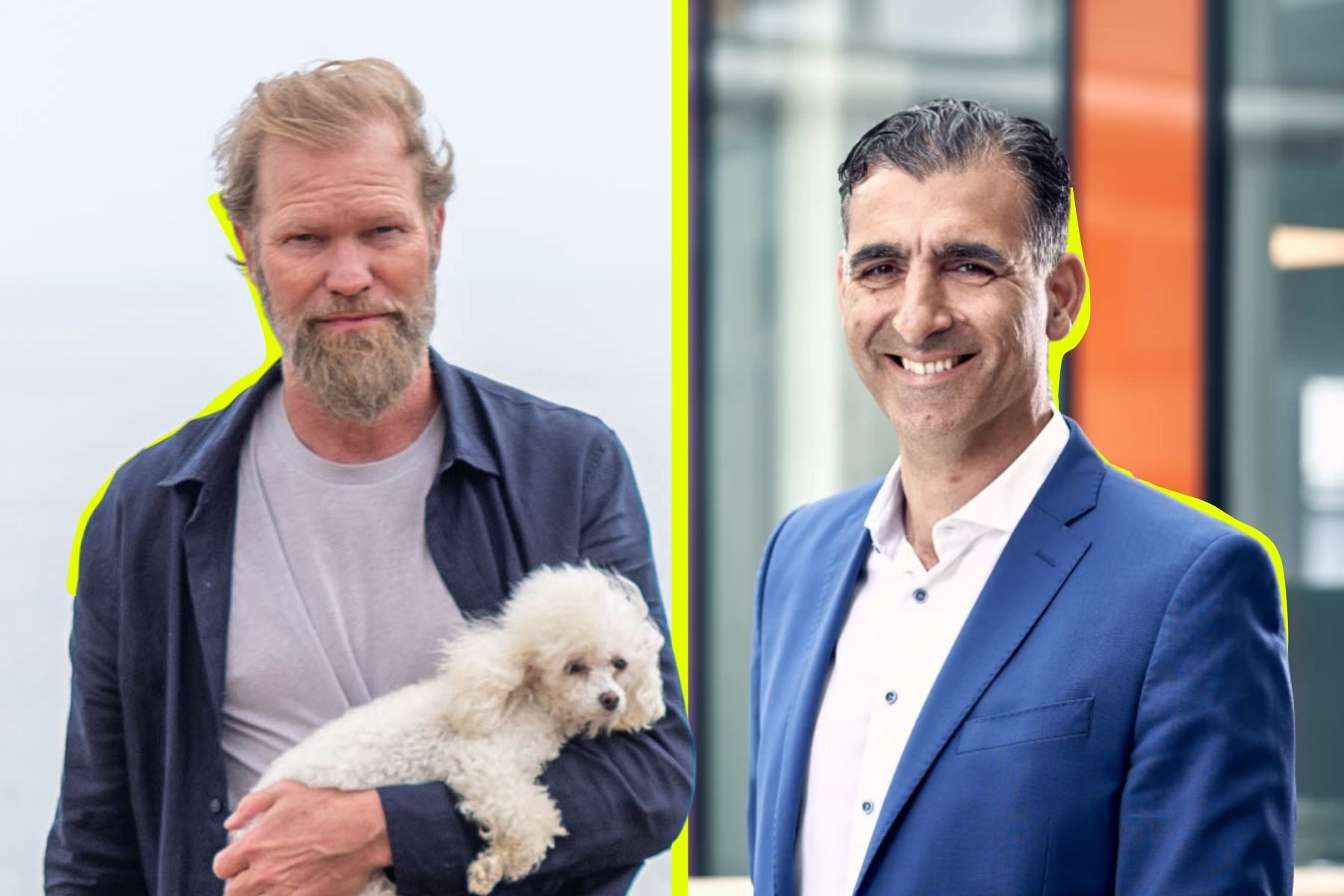
The founders of Foxway have launched a investment vehicle targeting growth stage companies in earth observation and circularity – but without 'hype'.<br><br>"What companies are really needed and contribute in a meaningful way to society?" asks partner Stefan Nilsson.


Former execs at Swedish circular tech firm Foxway, Stefan Nilsson and Martin Backman, have launched a new investment company, Ramn, together with entrepreneur and investor Carl-Johan Björklund.
Nilsson and Backman founded Foxway in 2009, and were among the key figures behind its transformation into a global platform for circular IT – refurbishing, reselling and managing the lifecycle of electronics for large corporates, public sector clients, and OEMs. Under their watch, Foxway grew through a series of acquisitions and built a business around extending product lifecycles, cutting e-waste and challenging the industry’s dependence on constant hardware replacement.
In 2023, majority ownership of Foxway was acquired by private equity firm Nordic Capital in a deal that valued the company at an estimated SEK 6–7bn (€550–640m), according to Swedish media. The takeover marked Foxway’s transition from founder-led growth story to a large-scale, PE-owned platform – and, for Nilsson and Backman, a natural point to step back and start something new.
Long term horizon
With Ramn – the Old Swedish word for raven – the ambition is different. The goal is to build long-term resilient companies whose operations will have a clear societal value ten years from now – even as conditions change rapidly.
Nilsson argues that we are facing a convergence of challenges: recessionary pressure, ecosystem degradation, an economy that may no longer grow by default, and a growing dependence on imported food, energy and critical raw materials.
“What happens in the event of war, conflict, or further stress on our financial systems?” he asks. “Then you start questioning which companies are actually needed – and which ones contribute to society in a meaningful way. We want to build relevant and resilient companies, not trends or hypes.”
The driving force, according to Nilsson, is frustration with how dominant investment models have evolved.
“We’ve had a kind of tailwind capitalism where it’s been too easy to get hold of money and too easy to succeed. Almost no one stops to ask: is the world better with or without this company?”
Not for startups
Ramn’s capital comes primarily from the founders themselves and may be complemented by a small number of like-minded family offices and long-term investors – explicitly not traditional private equity with short exit cycles.
At least initially, the focus is not on startups. Ramn is already operational and is looking at more mature, profitable companies, ideally with revenues of SEK 25–150m (€2.25m to €13.5m). The idea is to support growth by actively contributing operational experience, governance and strategic direction – rather than financial engineering.
Why focus on established businesses instead of early-stage technology?
“Partly because our capital base is limited, and partly because we believe new technology often works better when it’s integrated into an already functioning, profitable business,” Nilsson says. “That gives the technology revenue, customers and a clear role. If there’s no paying customer, there’s a risk the strategy was wrong from the start. Too often there’s guesswork and fascination with the technology itself.”
Two areas Ramn finds particularly interesting are earth observation and circularity – though Nilsson is cautious about the latter.
“I’ve heard the word circularity so many times that I’m tired of it. A lot of it is pure fake. We only invest where circularity can actually be scaled industrially and create real value.”
'You don’t have to sell junk just because you can'
Here, Nilsson and Backman draw directly on what they call “the Foxway playbook”: building business models around multiple product life cycles, putting values first, and actively cutting product lines that don’t hold up – even when that hurts short-term revenue.
“You don’t have to sell junk just because it’s possible. In earlier acquisitions, we cut substantial parts of the business based on our values,” Nilsson says. “But by adding real circularity, companies could still grow – and remain profitable.”
“It’s not just about doing good,” he adds. “There’s a sound business strategy in this.”
The name Ramn nods to Nilsson’s upbringing close to nature, where animals symbolised traits such as wisdom, adaptability and guidance. The fox in Foxway and the raven in Ramn follow the same symbolic line.
Get full access to Europe's new platform for impact news
- Quality journalism, interviews, investor profiles and deep-dives
- Daily newsletter with top stories, latest funding rounds and roundup to keep you in the loop
Keep reading – get in the loop!
- Håll dig i loopen med vårt dagliga nyhetsbrev (gratis!)
- Full tillgång till daglig kvalitetsjournalistik med allt du behöver veta inom impact
- Affärsnätverk för entreprenörer och investerare med månatliga meetups
Fortsätt läsa – kom in i loopen!
- Håll dig i loopen med vårt dagliga nyhetsbrev (gratis)!
- Full tillgång till daglig kvalitetsjournalistik med allt du behöver veta inom impact
- Affärsnätverk för entreprenörer och investerare med månatliga meetups
More articles:

This pension fund has a €1bn pot for climate tech startups. Here's the thesis behind its latest investment