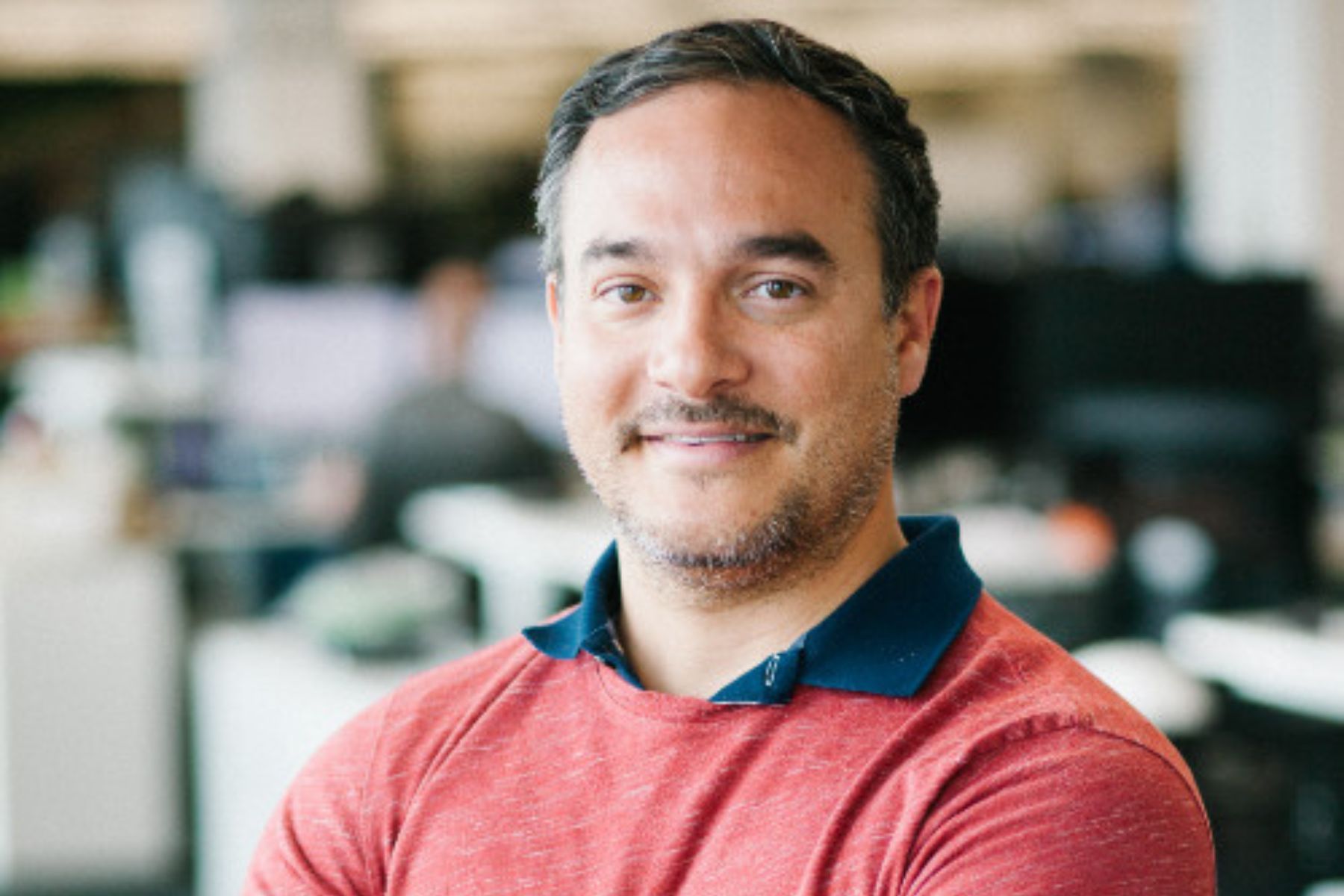


The Swedish restaurant and food waste app Karma was brutally hit by the COVID pandemic – and went from 100 employees to 18. <br><br>Today, it has rebuilt its entire platform with AI – with AI clones that hold their own meetings. <br><br>"It sounds insane but it has led to an incredible amount of great insights," founder Hjalmar Ståhlberg Nordegren tells Impact Loop, including:<br><br>→ The CEO's own AI clone<br>→ The nightly AI fact-checks<br>→ The food waste app's comeback


Founded in 2025, Stockholm-based Karma first made its name with an app tackling food waste, connecting consumers with restaurants selling surplus food at reduced prices. Backed by a total of €16m from investors including the Kinnevik family office, the company was long considered one of Sweden's most recognised impact startups.
But when the pandemic hit, both the restaurant industry and Karma took a severe blow. The company went from more than 100 employees down to 18 – while customers still expected the same level of service as before.
The answer, says co-founder and CEO Hjalmar Ståhlberg Nordegren, was to rebuild from the ground up – and pivot into a full operating system for restaurants.
"We didn't have much of a choice, really," Ståhlberg Nordegren tells Impact Loop. "We needed to do an incredible amount with very few hands and heads."
They started experimenting with an early research preview of Claude Code, the "vibe-coding tool" launched by Anthropic.
"In the beginning we probably used it like most people – trying it here and there," says Ståhlberg Nordegren. "But in the spring of last year we made an active decision: either we rewrite our codebase and shift to being a proper AI company, or we're going to limp along."
Working by the "AI first" principle
Karma decided to rebuild the company as AI first, from the ground up.
Using Claude as the engine – and with their own frameworks, rules and control mechanisms layered on top – the team built an entirely new platform.
Either we shift to being a proper AI company, or we're going to limp along
According to Ståhlberg Nordegren, it took six months to go from the start of development to a full beta version of the point-of-sale system ready for testing in restaurants.
"We have coded more and better in the last twelve months than in the previous nine years," he says.
The shift has also delivered commercial results. In the third quarter of 2025, the company reached profitability and recently raised roughly €900,000 from existing and new investors. Karma also won a major public procurement process against considerably larger competitors.
"We entered to stress-test what we had built," says Ståhlberg Nordegren, which he claims ended with Karma beating out established rivals including Oracle.
Catching problems with AI
In early February, the company released its second generation of the operating system – just a few months after the first AI-first version launched. The platform can now give customers real-time sales insights and automatically suggest campaigns.
Suddenly I have a shadow clone with all the time in the world
Where Karma previously spent significant time building dashboards for different needs, customers can today simply ask questions directly of their data and receive answers in the form of analyses and ready-made graphs.
AI has also changed how the team works internally. By continuously reading logs, detecting patterns and flagging anomalies, the system can catch problems before either customers or the team have noticed them.
An "AI shadow cabinet"
AI isn't only baked into the product – it runs internally too. Karma has built what Ståhlberg Nordegren calls a "shadow governance" structure: an AI replica made up of agents that mirror different roles, share the same goals, and work with the same data as the human team.
"I have a CEO clone that is an agent I can bounce ideas off – but which can also bounce ideas off the other agents," he explains. "They even have their own meetings and run their own stand-ups. It sounds insane, but it has led to an incredible amount of genuinely good insights."
The clones can take on tasks and cover the meetings that never quite get scheduled.
"Suddenly I have a shadow clone with all the time in the world."
How to train the agents
Getting there hasn't been painless. The team has had to "herd" the agents until they are sufficiently capable of standing on their own – including through self-improving loops that allow the AI to work out for itself where it went wrong.
"We've really tried to apply that whole one-per-cent-better-every-day cliché that everyone talks about," says Ståhlberg Nordegren. "It doesn't quite work on a human, but on AI it works pretty well – they can genuinely improve a little every day if you set a fairly hard feedback loop."
To ensure the clones don't fabricate information or hallucinate, Karma runs a dedicated "controller AI" every night that cross-checks the clones' statements against the company's actual database, catching any inaccuracies before they cause problems.
Ståhlberg Nordegren doesn't rule out the possibility of things going wrong. But he believes the alternative – not using AI – is worse.
Instead, they have settled on a way of working in which the AI agents are continuously evaluated against shared goals and improved over time.
"It almost feels like a symbiosis. If the AI isn't moving towards the same goals, we notice it starts scoring worse on its own evaluations," he says.
A second life for the food waste app
The food waste app – which survived the pandemic but has received relatively little attention since as the company focused on its new point-of-sale system – is now due for a fresh start. According to Ståhlberg Nordegren, it will get significantly more focus going forward.
Rather than sitting alongside the platform as a separate product, waste management is now becoming an integrated part of Karma's offering.
Restaurants will be able to list surplus food directly from the point-of-sale system, while Karma is also opening up to other POS systems and wholesalers to connect and submit surplus stock to the app.
The company will also use AI to predict waste earlier in the day – not just to sell leftovers, but to help restaurants plan purchasing and production better from the outset.
"The waste side is really a last resort. The best outcome is if you can adapt your production," says Ståhlberg Nordegren.
Do you like this type of AI case-based story? Let us know – and we will write more of them! If you or your company could be a good case, get in touch at editorial@loop.se.
Get full access to Europe's new platform for impact news
- Quality journalism, interviews, investor profiles and deep-dives
- Daily newsletter with top stories, latest funding rounds and roundup to keep you in the loop
Keep reading – get in the loop!
- Håll dig i loopen med vårt dagliga nyhetsbrev (gratis!)
- Full tillgång till daglig kvalitetsjournalistik med allt du behöver veta inom impact
- Affärsnätverk för entreprenörer och investerare med månatliga meetups
Fortsätt läsa – kom in i loopen!
- Håll dig i loopen med vårt dagliga nyhetsbrev (gratis)!
- Full tillgång till daglig kvalitetsjournalistik med allt du behöver veta inom impact
- Affärsnätverk för entreprenörer och investerare med månatliga meetups