Expert doubts Stegra should get more public funds: ‘It’s a very risky project...they lack transparency’
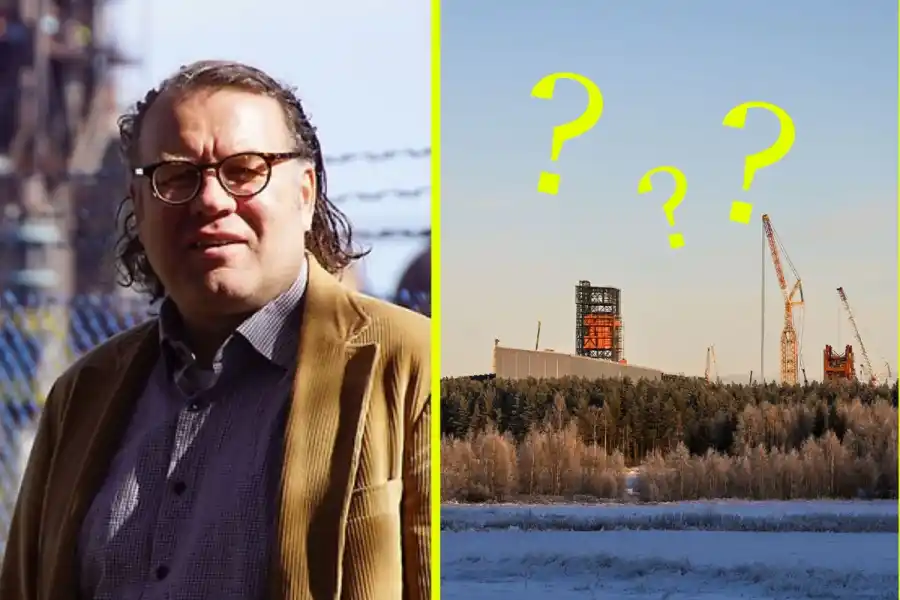
Ossi Pesämaa, associate professor at Luleå University of Technology with an image of Stegra's plant in Boden, northern Sweden under construction. Press photos/Impact Loop design

Green steel startup Stegra is facing growing doubts over its €7 billion plant in Boden, northern Sweden, with one expert close to the project questioning its claimed progress, transparency, and the case for more government backing. <br><br>

Managing editor
No items found.

Stegra, Europe’s most high-profile green steel startup, is facing mounting doubts over its financial and operational viability, raising questions about whether further Swedish government support is justified, according an well-regarded academic close to the project.

Ossi Pesämaa, Associate Professor at Luleå University of Technology (located 35km from Stegra's plant) and an expert on megaprojects, said the case for further public investment is “highly questionable.”

“At this moment… it is a very risky project,” he told Impact Loop in an interview. “I’m not sure that more public money should be spent on it,” adding that many would prefer a “market-based project where they can defend their financial decision based on market values.”

As Impact Loop previously reported, Stegra faces a funding shortfall of up to €1 billion and is currently scrambling to secure new commitments from new and existing investors amid fears it may face insolvency.

Stegra's push for government support

Stegra has been outspoken about the need for more government money, warning that the lack of commitments from the Swedish government risks derailing the green transition.

Stegra, which aims to produce low-carbon steel using hydrogen generated from renewable energy, has already received significant government backing to construct its plant in Boden, northern Sweden. In 2024, the Swedish Energy Agency granted Stegra €100m, and last month dished out another €41m grant, on condition that the company gets firm commitments from more private investors.

Still public funding is a tiny slice of the total €6.5 billion total the company has secured since its founding in 2020.

However, Pesämaa believes the government's reluctance to bankroll the project is justified. “Stegra seems… very optimistic and at the same time not very transparent… that raises more questions,” he said.

Progress overestimated?

Pesämaa highlighted both cost and progress concerns. The plant’s investment budget now exceeds €7 billion, roughly more than the current market value of Sweden’s incumbent steel giant SSAB, which has established production, logistics, and supplier networks.

The academic also cast doubts over the construction progress at the Boden plant, saying that insiders he’s spoken with estimate Stegra’s facility is closer to halfway done, rather than the 60 % claimed by management.

“Our deep throats tell us that their guess would be that [Stegra’s green steel plant] is only 50% ready,” said Pesämaa. “The company is not very transparent.”

‘Doesn’t have the experience’

Pesämaa also took aim at the experience of Stegra’s engineering and management team.

“Some of the project and programme leaders don’t have the experience for running this type of programme,” he said, citing the testimonies of former employees he's spoken with.

“When it becomes a megaproject, the scales are so much bigger… you’re going to make mistakes if you’re going so quickly,” Pesämaa said.

The pressure to scale fast – and the potential mistakes that may come as a consequence – echoes the Northvolt story, where rapid expansion and ambitious timelines led to operational challenges and investor scrutiny.

It also contrasts with another Swedish green steel project called Hybrit, run by state-backed giants SSAB, LKAB, and Vattenfall. Pesämaa described the joint venture as “less uncertain” and benefiting from decades of industrial expertise.

A cloud over the North

Adding to the financial stressors, Stegra has recently faced legal inquiries. A police raid last week forced 280 workers to leave the plant over work permit irregularities, with more than 30 already deported, according to local Swedish media.

Such disruptions come amid a broader funding crunch and growing skepticism over the company’s ability to achieve full-scale operation in the near term.

Public sentiment toward green projects in northern Sweden has shifted dramatically, said Pesämaa, which he attributes partly to the struggles of Northvolt and Stegra but also broader political shifts to right-wing discourse.

Where there was once a boom-town atmosphere in the North, “almost all the old optimistic views are gone,” he said. “Now you just see the negative – shared all over social media and the media. It’s shifted to the other end – which is also wrong.”

Get full access to Europe's new platform for impact news

  • Quality journalism, interviews, investor profiles and deep-dives
  • Daily newsletter with top stories, latest funding rounds and roundup to keep you in the loop
from €33/month
Save €189 per year (32%) compared to monthly billing.
Save 15% with a yearly subscription.
Already a subscriber? Log in

Keep reading – get in the loop!

  • Håll dig i loopen med vårt dagliga nyhetsbrev (gratis!)
  • Full tillgång till daglig kvalitetsjournalistik med allt du behöver veta inom impact
  • Affärsnätverk för entreprenörer och investerare med månatliga meetups
Thank you! Your submission has been received!
Oops! Something went wrong while submitting the form.

Fortsätt läsa – kom in i loopen!

  • Håll dig i loopen med vårt dagliga nyhetsbrev (gratis)!
  • Full tillgång till daglig kvalitetsjournalistik med allt du behöver veta inom impact
  • Affärsnätverk för entreprenörer och investerare med månatliga meetups
Thank you! Your submission has been received!
Oops! Something went wrong while submitting the form.